
 English
 Tiếng Việt
 日本語
Ngoc Ha makes digital transformation and AI the focus of the 2026 – 2027 school year
Implementing the requirements of the Hanoi Department of Education and Training, Ngoc Ha Ward People’s Committee has just issued a plan to implement digital transformation in the field of education and training for the 2026 – 2027 school year. According to the plan, digital transformation is identified as a cross-cutting task, directly associated with innovating the way of management, administration, teaching organization, testing, evaluation and provision of educational services. Implementation must be learner- and teacher-centered, taking convenience, efficiency and service quality as a measure, while gradually reducing records, procedures, reports and manual operations that cause administrative pressure for educational institutions.
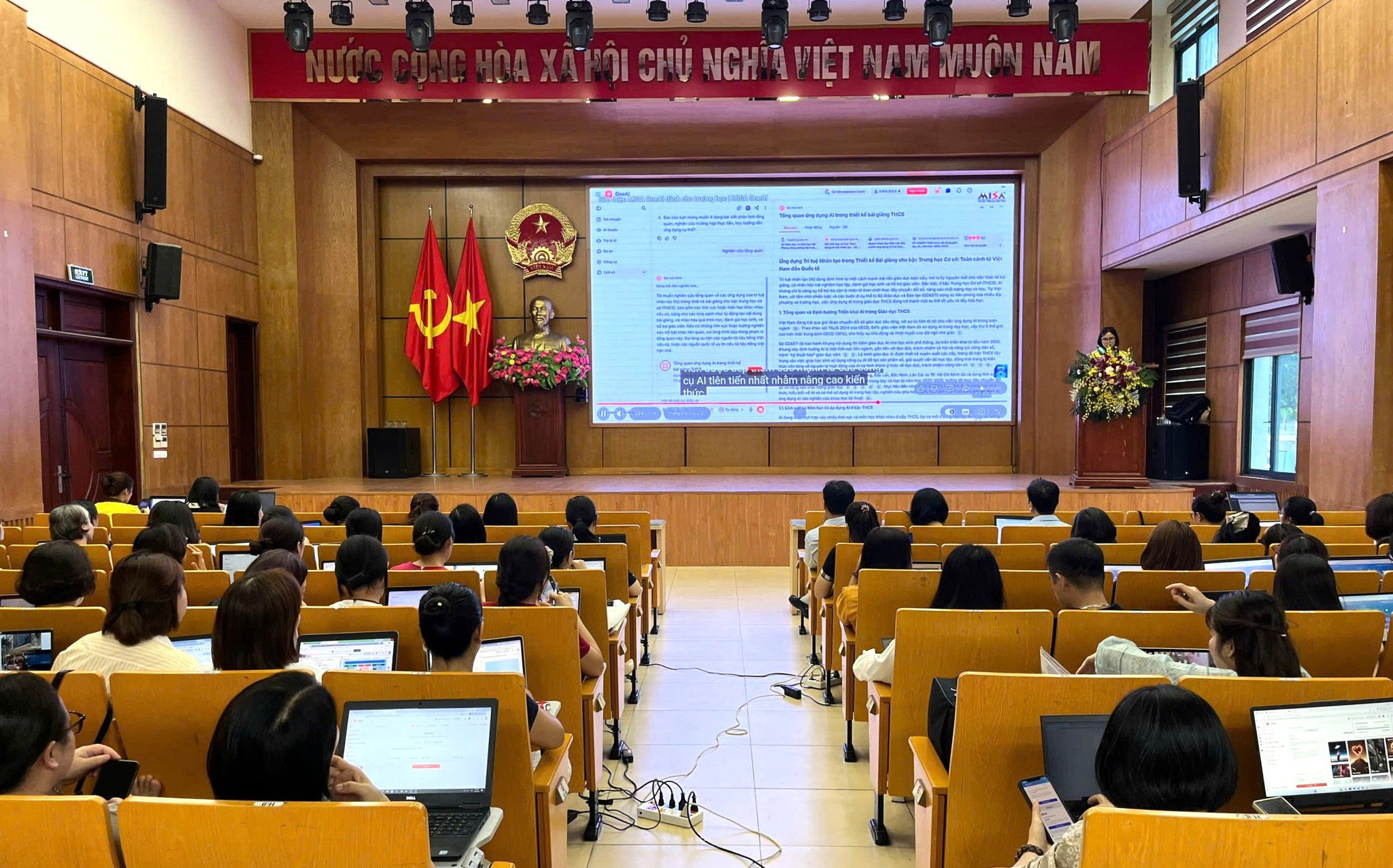
A central requirement is to move from distributed data to a “true, complete, clean, live, unified, and shared” data system. Schools must regularly update, exploit and use data according to regulations, and limit asking learners, parents or teachers to re-provide information that is already available on shared platforms. The application of technology and artificial intelligence is also required to follow the “6 clarity” principle, including clear person, clear job, clear time, clear responsibility, clear product and clear authority. Heads of educational institutions are directly responsible for organizing the implementation of digital transformation tasks at the unit, from assigning focal points, determining progress to checking products and results. Schools must also review, standardize, clean and update data on facilities, learners, teachers, administrators and specialized data on the Hanoi Education Sector Database System. For preschool levels, the review includes public and non-public facilities, independent class groups and related data. The data cleansing must be completed by October 30, 2026 and continue regularly thereafter. Ngoc Ha Ward also deployed unified digital transcripts for general education institutions according to Circular No. 70/2026/TT-BGDDT dated August 22, 2026 of the Ministry of Education and Training. Transcript data must be formed from the school’s original data, go through the process of checking, approval, digital signature and synchronization according to regulations. In parallel, the locality will pilot the National Digital Platform for education and training management, including the Educational Institution Management Platform and the Data Analysis and Exploitation Platform to serve management and administration. Educational institutions in the area are also required to gradually uniformly use shared digital platforms in administrative activities. The information system for handling administrative procedures in the field of education and training will be implemented according to the instructions of the Ministry of Education and Training and Hanoi city. The goal is to form a unified digital working environment, reduce manual processes and take advantage of existing data to shorten work processing time.  In professional activities, the ward continues to deploy online teaching and combined teaching according to Circular No. 09/2021/TT-BGDDT for general and continuing education establishments. Schools will develop teaching plans on the industry’s LMS learning management system, and gradually organize tests and assessments in the digital environment or on computers at qualified units, ensuring the requirements of fairness, safety and security. Digital learning materials, question banks, electronic libraries and digital libraries are also identified as some of the contents that need to continue to be developed, standardized, exploited and shared. Units are encouraged to contribute resources to the industry’s shared digital learning resource repository and coordinate to effectively exploit these resources. With preschool education, digital technology is mainly used to support administration, professional development for teachers, design learning materials and enhance connection with families, not replacing children’s direct interaction, play, movement and real-life experiences. The application of technology in preschool education must pay special attention to children’s physical and mental health, privacy and personal data, appropriate for each age. Ngoc Ha Ward will also organize or participate in training and fostering programs to improve digital capabilities for students, teachers, administrators and staff in educational institutions. For artificial intelligence, schools are allowed to choose appropriate content to apply and pilot in educational activities. AI can be used to support teachers in preparing lessons, building learning materials, designing teaching activities, testing, evaluating or supporting managers in synthesizing and analyzing data. However, any results generated by AI must be verified for accuracy and relevance; Technology should not replace the professional responsibility or decision-making authority of teachers and administrators. Educational institutions must also review, promulgate or complete rules for using AI appropriate to each group of learners and educational activities. Regulations need to clarify cases where AI is allowed, limited or not used, user responsibilities, information verification requirements, data security assurance and academic integrity compliance. For preschool levels, AI is prioritized to serve administration, support teachers and design learning materials; Schools are not allowed to arbitrarily put children’s images, videos, voices, health information or personal data into AI tools, and do not let children use artificial intelligence without the organization and control of teachers. In addition to professional tasks, Ngoc Ha ward will continue to invest and improve digital infrastructure, ensure information security and protect personal data during the implementation process. Implementation results will be evaluated through the level of digital transformation and construction of digital schools in the field of education and training in the 2026 – 2027 school year, thereby gradually forming a digital education environment that is synchronous, safe and consistent with the industry’s innovation requirements.