
 English
 Tiếng Việt
 日本語
Promoting cultural strength and great unity as a resource for national development
The Central Propaganda Department emphasized that promoting the historical and ideological values of the First National Cultural Conference on November 24, 1946, Vietnamese Culture Day and the Great National Solidarity Festival should not only stop at commemorative activities but should be concretized into tasks associated with social life. The implementation process must aim to raise awareness, promote the people’s subjective role, associate cultural development with the implementation of democracy, consolidate social consensus and improve the material and spiritual life of the community.
One of the important requirements is to continue to thoroughly grasp and creatively apply Ho Chi Minh’s ideology and the Party’s guidelines on culture. Party committees, party organizations, authorities, officials, party members and people of all walks of life need to be more fully aware of the position of culture and people in the cause of building and protecting the Fatherland. Culture is identified not only as a spiritual foundation but also as an endogenous resource, a great driving force, a pillar and a regulatory system for the country’s rapid and sustainable development. 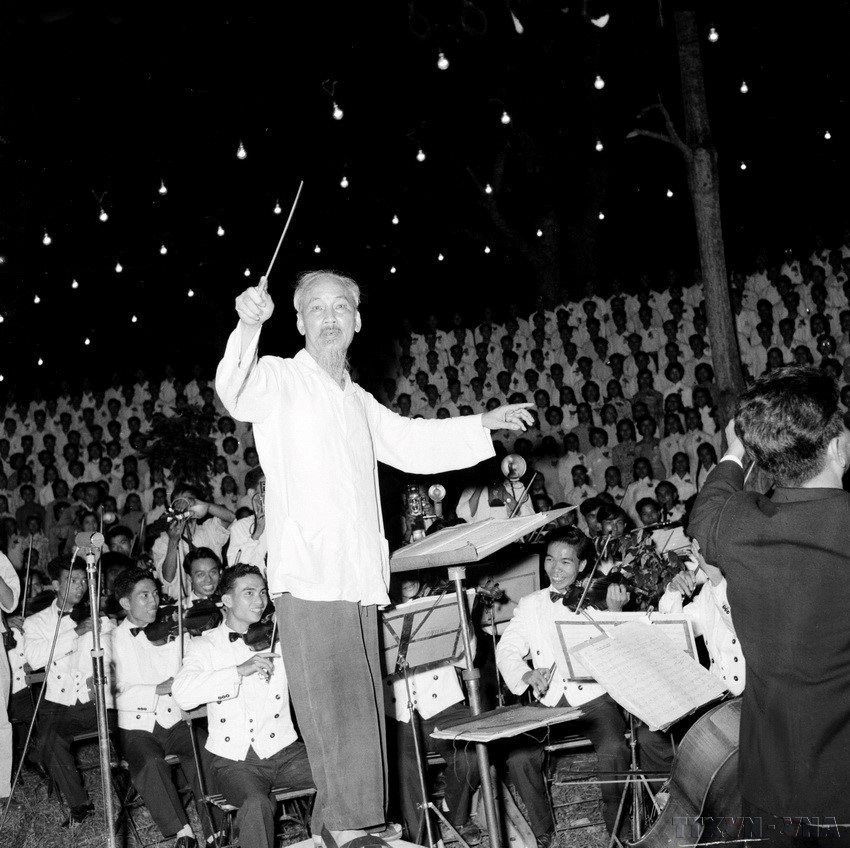
Along with that, it is necessary to continue to deepen the historical, theoretical and practical values of the First National Cultural Conference, including President Ho Chi Minh’s ideology “Culture must light the way for the nation.” The spirit of great national solidarity also needs to continue to be affirmed as a precious tradition, a great source of strength and an important factor creating the victories of the Vietnamese revolution. Cultural power needs to be promoted to consolidate social consensus and strengthen bonds between classes, ethnicities, religions and communities. Learning and mastering cultural perspectives must be associated with practical application so that good values truly penetrate deeply into families, schools, agencies, businesses and communities, becoming the foundation in how to behave and organize social life. The responsibilities of the leader are also set out more clearly during the implementation process. Officials and party members need to promote their role as role models in practicing cultural standards, ethics, lifestyle and in implementing guidelines and policies. When cultural values are expressed through specific actions, they can become a bond that binds the community and creates more internal strength for the nation. For activities in response to Vietnam Culture Day, the Central Propaganda Department oriented the organization to be practical, diverse, focused and suitable to the conditions of each locality and region. Programs need to focus on preserving and promoting national cultural heritage, encouraging literary and artistic creativity, and promoting the role of artists, intellectuals, artisans and the community in preserving and transmitting good values. Building a cultural environment also needs to be deployed synchronously in many different spaces. From families, schools to agencies, units, businesses and residential areas, standards of ethics, lifestyle, public service culture, business ethics and social responsibility need to be promoted, thereby gradually forming civilized, healthy and highly cohesive living environments. Another requirement is to expand cultural access for population groups, especially in remote areas, ethnic minority areas and difficult areas. Digital technology needs to be applied more strongly in preserving and promoting heritage and providing cultural products and services, while contributing to building a healthy cultural environment in cyberspace. The effectiveness of cultural activities also needs to be evaluated by more substantive criteria. Instead of chasing the number of events or organizational form, we need to pay attention to the level of participation, accessibility and level of enjoyment of the people. This is the basis for determining whether the program really creates value for the community or not. For the Great National Solidarity Festival, the content and organization method need to continue to be innovated in the direction of being close to the people, close to the grassroots, practical and economical. Community exchange, cultural, arts and sports activities can be combined with evaluating the results of emulation movements, praising good examples, taking care of people in difficult circumstances and solving practical local problems. Promoting democracy at the grassroots is also considered an important content of consolidating the great solidarity bloc. People need to have the opportunity to participate in discussions, contribute ideas, propose initiatives and monitor the implementation of local tasks. Strengthening dialogue, listening and promptly reflecting legitimate thoughts and aspirations will contribute to strengthening the relationship between the People and party committees, authorities and the Vietnam Fatherland Front. Through that, the residential community is aimed at building in the spirit of solidarity, consensus, civilization, safety and gratitude. The values of patriotism, kindness, tolerance, and mutual love need to continue to be spread, while respecting the diversity of culture, beliefs, religions and unique characteristics of each community. Patriotic emulation movements, campaigns to build cultural life, build new rural areas and civilized cities need to be linked to specific local goals. Community spirit can be transformed into activities that support livelihood development, poverty reduction, environmental protection, heritage preservation and care for people with meritorious services and disadvantaged groups. The role of prestigious people, religious dignitaries, intellectuals, artists, businessmen and typical individuals also needs to be promoted in mobilizing and connecting the community. The participation of people in preventing and fighting natural disasters, epidemics, ensuring security and order and solving common problems in the area is a concrete manifestation of transforming the spirit of solidarity into action. Propaganda work about the first National Cultural Conference, Vietnamese Cultural Day and the Great National Solidarity Festival also needs to be innovated in a lively, accessible and suitable way for each public group. Press, radio, television, and basic information systems need to be effectively combined with digital platforms and social networks to expand the scope of spread. 
Instead of just focusing on generalized messages, propaganda activities need to focus on specific stories, characters, models and results. Examples of good people, good deeds, community initiatives in preserving heritage, building a cultural environment, implementing democracy at the grassroots and strengthening the great solidarity bloc can create greater persuasion and diffusion.
Coordination between propaganda agencies, state management agencies in charge of culture, the Vietnam Fatherland Front, socio-political organizations, the press and local authorities also needs to be strengthened. Propaganda content must be linked to practical activities, avoid spreading and duplicating, and proactively discover and replicate effective models suitable for each area. The Central Propaganda Department also requires increased responsibility in implementation, in which the Party Committee promotes the leadership role, the government performs management responsibilities, the Vietnam Fatherland Front and socio-political organizations strengthen coordination, and the People actively participate. Each agency, unit and locality needs to clearly define the focus content, assign responsibilities, progress and specific resources. The activities of the Vietnam Fatherland Front and the Front Working Committee in residential areas need to be improved in quality, aiming to build a team of officials who are close to the people, close to the people, know how to listen and are responsible to the community. Along with that, inspection, supervision, preliminary and final reviews need to be deployed regularly to properly evaluate implementation effectiveness. Results are not only measured by the number of organized activities but also based on the level of people’s participation, the quality and sustainability of the program, changes in the cultural environment, community life and the level of social consensus. Groups and individuals who make positive contributions need to be promptly praised, and at the same time, limitations and inadequacies must be discovered to adjust organizational methods. Through practical, economical implementation and limited formality, cultural values and the spirit of great national solidarity are expected to gradually transform into endogenous resources for development. This is also a way for historical values from the First National Cultural Conference to continue to be inherited in modern life, associated with the goal of building a prosperous, happy country and an increasingly cohesive social community.