
 English
 Tiếng Việt
 日本語
Hanoi recognizes the Vietnamese Ethnic Culture and Tourism Village as a city-level tourist area
Previously, on September 23, 2026, the appraisal team of the Hanoi Department of Culture, Sports and Tourism conducted a field survey at the Vietnamese Ethnic Culture and Tourism Village. The tourist area has a total area of 1,544 hectares, possessing many outstanding values of natural and cultural resources, characterized by semi-mountainous terrain in the transition zone between the Northern Delta and the Ba Vi mountain range. The system of valleys, peninsulas, trees and water surface creates a diverse landscape, in which the area of green trees and water surface accounts for more than 70% of the total area, contributing to the formation of a fresh and airy environment.
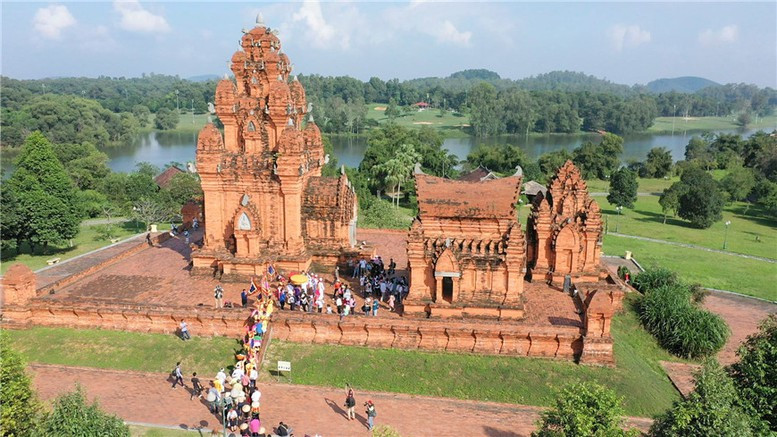 The Vietnamese Ethnic Culture and Tourism Village is a city-level tourist area. Photo: Hanoimoi
One of the important factors that create the landscape value of the tourist area is Dong Mo Lake. Of the total planned area of 1,544 hectares, the water surface of Dong Mo Lake in the Cultural Village area accounts for 935.31 hectares. The large water space and rich ecosystem create conditions for the development of many types of tourism such as resorts, green tourism, sightseeing by boat, canoe, kayak, camping, team building and sports activities. Besides the natural landscape, cultural resources are identified as the core values that create the unique features of the Vietnamese Ethnic Culture and Tourism Village. The ethnic villages area has an area of about 196.8 hectares, divided into 4 village clusters representing regions and language groups, recreating the typical architectural space of 54 Vietnamese ethnic groups at a 1:1 ratio. Many works were built using traditional materials and techniques with the participation of artisans and ethnic people, from the stilt houses of the Thai and Muong people, the wall houses of the Tay and Ha Nhi people to the communal houses of the Gia Rai and Ba Na people or the long houses of the Ede people, thereby creating a diverse picture of ethnic architecture right in the Capital.
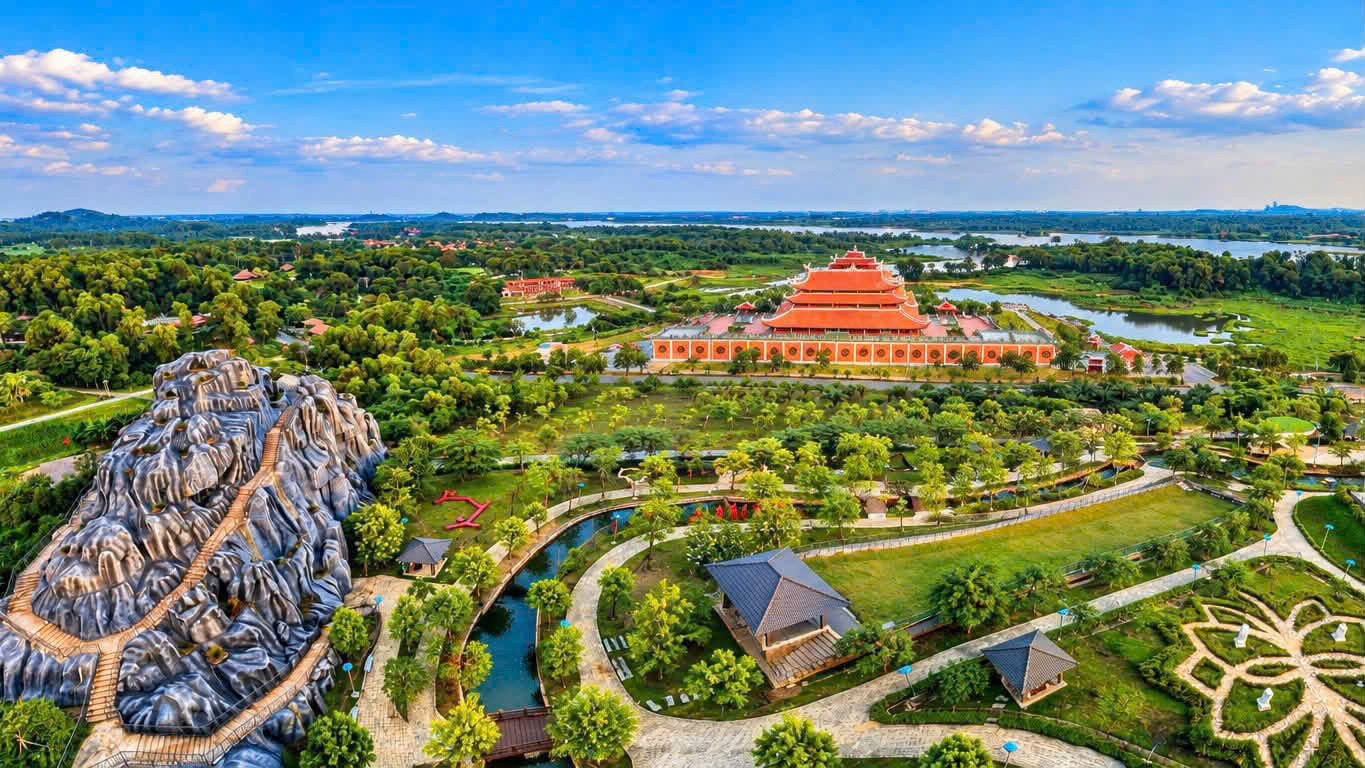 Panorama of Hung Vuong Square and the Ancestral Worship Ceremony Area at the Vietnamese Ethnic Culture and Tourism Village. Photo: Hanoimoi
The value of heritage space is also maintained through the regular presence of cultural subjects themselves. Currently, there are about 120 people of 16 ethnic groups living every day in the Village, directly participating in community activities, cultural performances, traditional crafts and culinary introductions. Every year, the Village organizes about 24 festivals and customs of ethnic minorities; 25 cultural and artistic exchange and performance programs; 7 exhibition activities, thematic displays and 3 programs to promote and introduce local culture and tourism. The village also welcomed about 62 ethnic communities with nearly 780 people from 51 localities across the country participating in the activity. In addition to the ethnic villages, the destination also has many places to visit and experience such as the Mountain Lake Area, the Fishing Village Area, the Creative Camp Accommodation Area, the Foot Hill Cuisine and the Ancestral Worship Ceremony Area. These projects contribute to forming a product system combining cultural, ecological, experiential and resort tourism, while expanding choices for tourists when visiting.
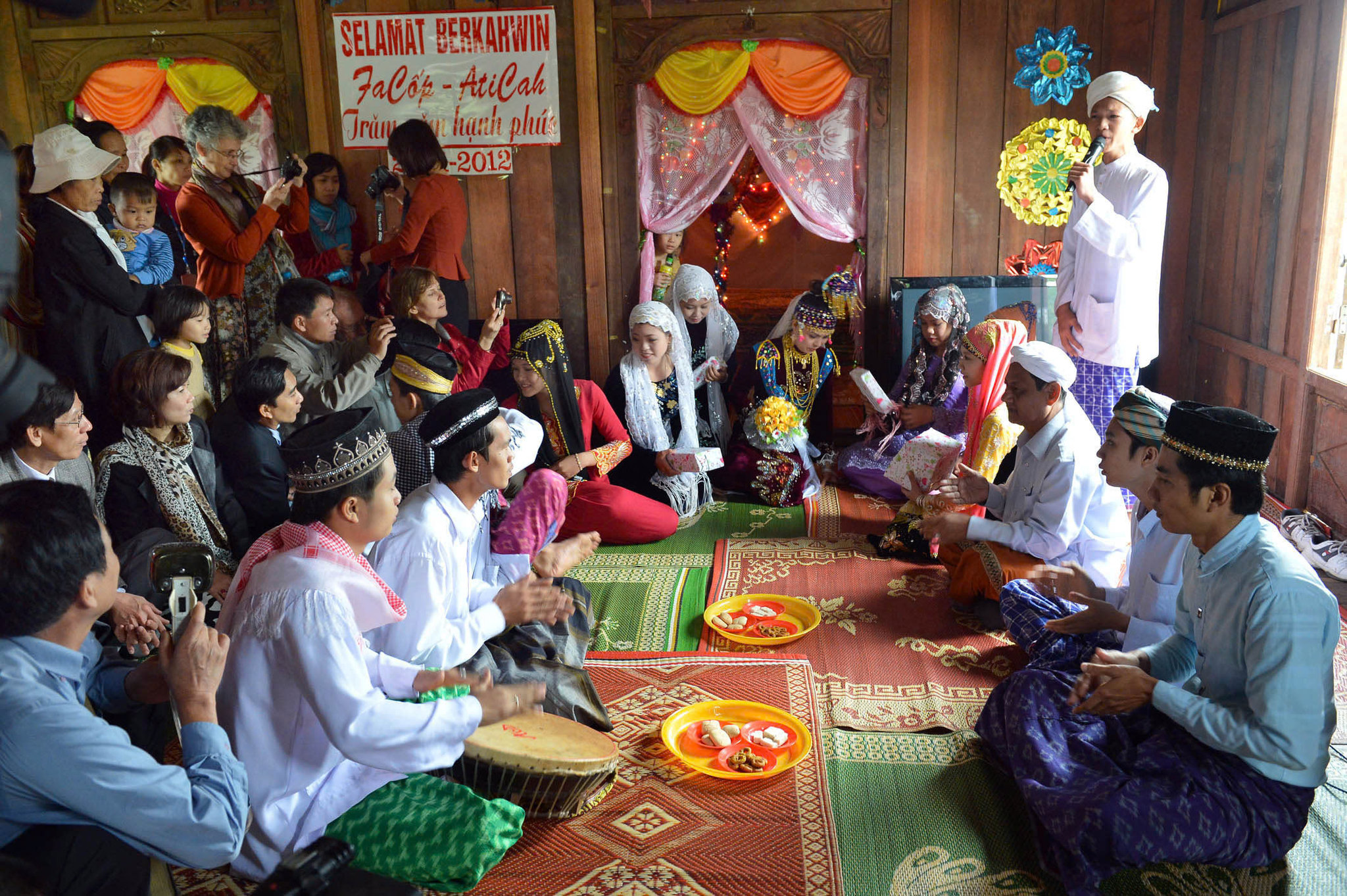 Many unique cultural activities of ethnic minorities are introduced at the Village. Photo: Hanoimoi
The system of facilities and services at the tourist area currently basically meets customer service requirements. The village has a system of signposts, a team of on-site tour guides, 54 explanations in Vietnamese and English, an information department, tourist support and free documents and publications. Transportation connecting to the tourist area is relatively convenient with many bus routes, while the parking lot can accommodate up to 600 motorbikes and 1,300 cars; Telecommunications and wifi systems are also guaranteed. According to the appraisal results, the Vietnamese Ethnic Culture and Tourism Village fully meets 4 conditions to be recognized as a tourist area according to the 2017 Law on Tourism, including tourism resources and defined boundaries; infrastructure, facilities and services; ability to connect to the national transportation and telecommunications system; along with conditions of security, order, social safety and environmental protection. Being recognized as a city-level tourist area creates an additional basis for the Vietnam Ethnic Culture and Tourism Village to continue to organize, manage, exploit and invest in accordance with regulations. This is also a condition for the destination to develop more typical tourism products, better promote the cultural values of Vietnam’s 54 ethnic groups and aim to develop sustainable and effective tourism in the coming time.