
 English
 Tiếng Việt
 日本語
Hanoi aims to build the brand “City to experience nightlife culture”
In the context of urban areas increasingly competing in tourism, services and experiences, the night-time economy is being seen as a new source of growth for many large cities. Night economic activities mainly take place in the time frame from 6:00 p.m. the previous day to 6:00 a.m. the next morning, helping to extend consumption time, create more jobs, increase revenue and promote fields such as culture, art, cuisine, entertainment and services. Decision No. 1129/QD-TTg dated July 27, 2020 of the Prime Minister on the Project to develop the night economy in Vietnam has created a policy foundation for localities to proactively build models suitable to their own conditions.
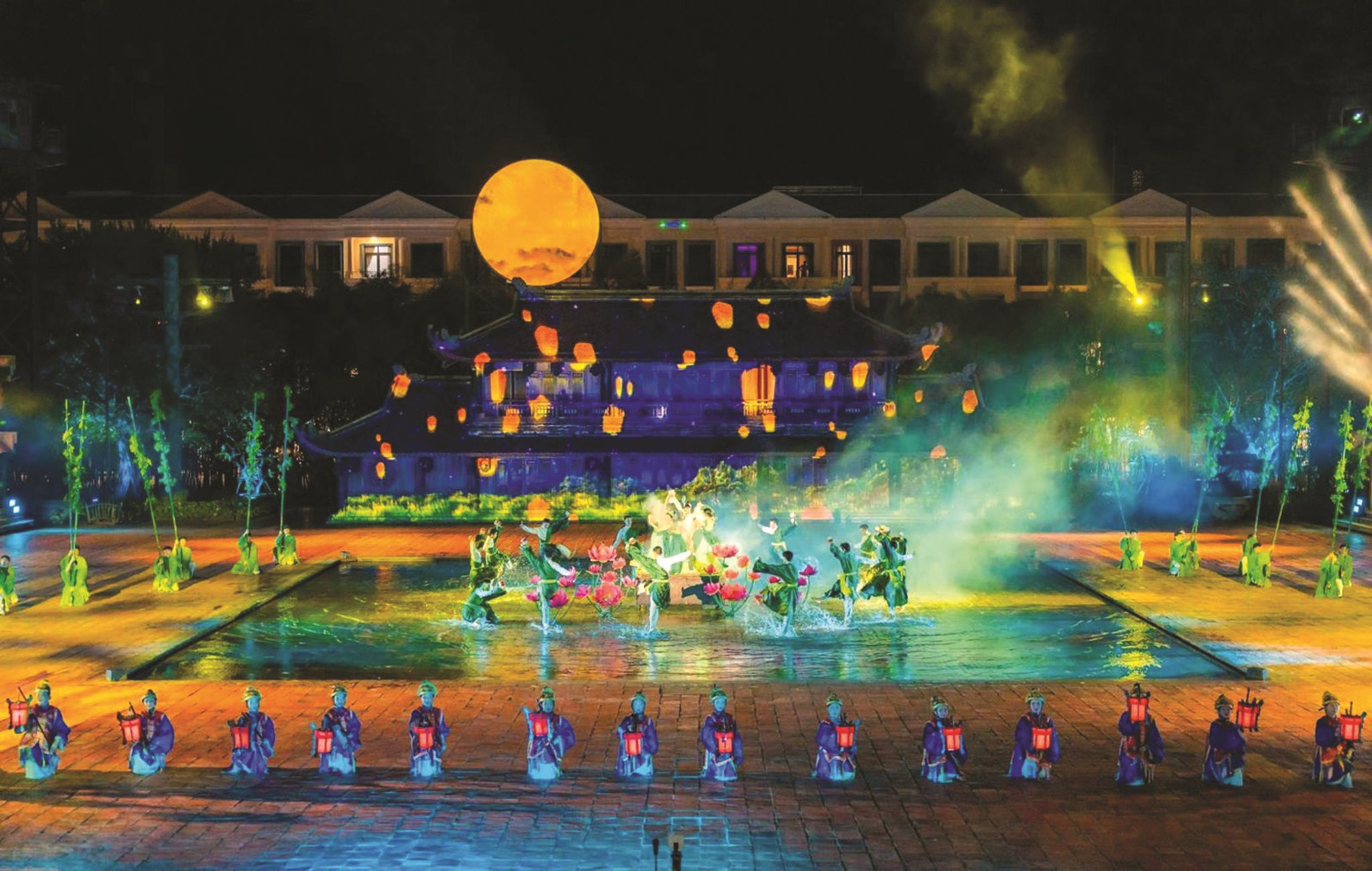
With a rich history, rich heritage system, diverse cultural and artistic life and large residential market, Hanoi has many advantages to develop the night economy in a unique direction. In the Project “Developing the Night Economy in Hanoi City for the period 2026 – 2030, with an orientation to 2045”, the city aims to contribute about 7-8% of GRDP by 2035, while forming cultural experience and night tourism areas on a regional scale, aiming for the brand “City of cultural experience and night services” of Asia. In fact, Hanoi has formed three relatively clear groups of night economic models including performing arts, sightseeing – night tourism and night cuisine – services. Many products have been able to create their own mark such as “Cai Luong – Essence of Vietnamese Art”, puppet shows, “Essence of the North”, “Sacred Night” tour, “Decoding the Imperial Citadel”, “Essence of Taoism”, “Legacy of Stone History”, “Ngoc Son – Mysterious Night”. Besides, there is a network of walking streets, culinary spaces and night services in the old town, Hoan Kiem Lake, Son Tay, Ngu Xa Island, Tong Duy Tan and Nguyen Van Tuyet. Among areas with great potential, Hoan Kiem holds a special position thanks to its dense concentration of relics, cultural space, tourism, trade and services. The system of old town, walking street, Phung Hung mural street and Tong Duy Tan – Cam Chi culinary route create favorable conditions to form a series of nightlife experiences. The pilot of extending business hours until 2:00 a.m. on three weekends since September 2016 has contributed to increasing the number of international visitors and improving the revenue of many businesses, while also extending the length of stay and spending levels of tourists. In addition to the central area, a number of other cultural spaces are also being exploited in new directions. The Temple of Literature – Quoc Tu Giam was developed into a creative cultural space with lantern activities, exhibitions, music and heritage experiences. The Red River landscape axis is also oriented to become a space associated with the creative economy and nighttime cultural industry, expanding the ability to organize cultural activities, sports, performances and light festivals. These advantages, combined with large market size, a significant number of tourists and relatively stable security conditions, create a foundation for Hanoi to develop a night-time economic ecosystem associated with culture and services.
However, the capital’s night economy has not yet developed commensurate with its potential. Nighttime spending is limited due to the lack of products capable of retaining customers for a long time, while the connection between destinations and services is not tight. Many activities are still scattered and have not yet formed a complete chain of experiences. Night service infrastructure is also lacking in uniformity, especially in terms of parking, transportation and other types of support after 24 hours. Along with that, the coordination mechanism between related fields still needs to continue to be improved because the night economy is not only a commercial issue but also associated with planning, traffic, environment, noise, security, livelihoods and cultural and artistic activities. The city also lacks large-scale entertainment, commercial and cultural centers that have the potential to become nighttime destinations. While existing products are quite diverse, many models are still small-scale and lack links between government, businesses, cultural units and communities. Faced with these limitations, Hanoi is approaching the night economy as part of modern urban governance instead of just considering it as a long-term business activity.
The city has built 8 groups of policies to balance economic development with the need to ensure security, order, environment and quality of life. Three expected operating time frames include from 6:00 p.m. to 11:00 p.m., from 6:00 p.m. to 2:00 a.m. and from 6:00 p.m. to 6:00 a.m. the next morning, depending on the characteristics of each area and the level of openness of the space. Technology is also identified as an important tool to support night economy management according to the smart urban model. Solutions such as digital payments, digital maps, security monitoring and digital platforms can help increase operational efficiency, provide information and support to visitors. The iHanoi application, with about 6 million registered accounts and from 450,000 to 500,000 visits per day, is considered one of the platforms that can support this process.
However, the application of technology still needs to play a supporting role, not replacing the organization and management model as well as the practical experiences and unique identities that are the core values of Hanoi’s night economy. In the long-term orientation, Hanoi chooses to develop the night economy based on its own characteristics instead of copying models from other cities. UNESCO’s “Creative City” title creates an additional foundation for the Capital to position its nightlife activities in the direction of culture, creativity, entertainment and experience, combining heritage, technology with contemporary art. The market is also oriented to expand not only to international visitors but also to inner-city residents, suburban residents, visitors from neighboring provinces and domestic tourists to create a stable source of demand. 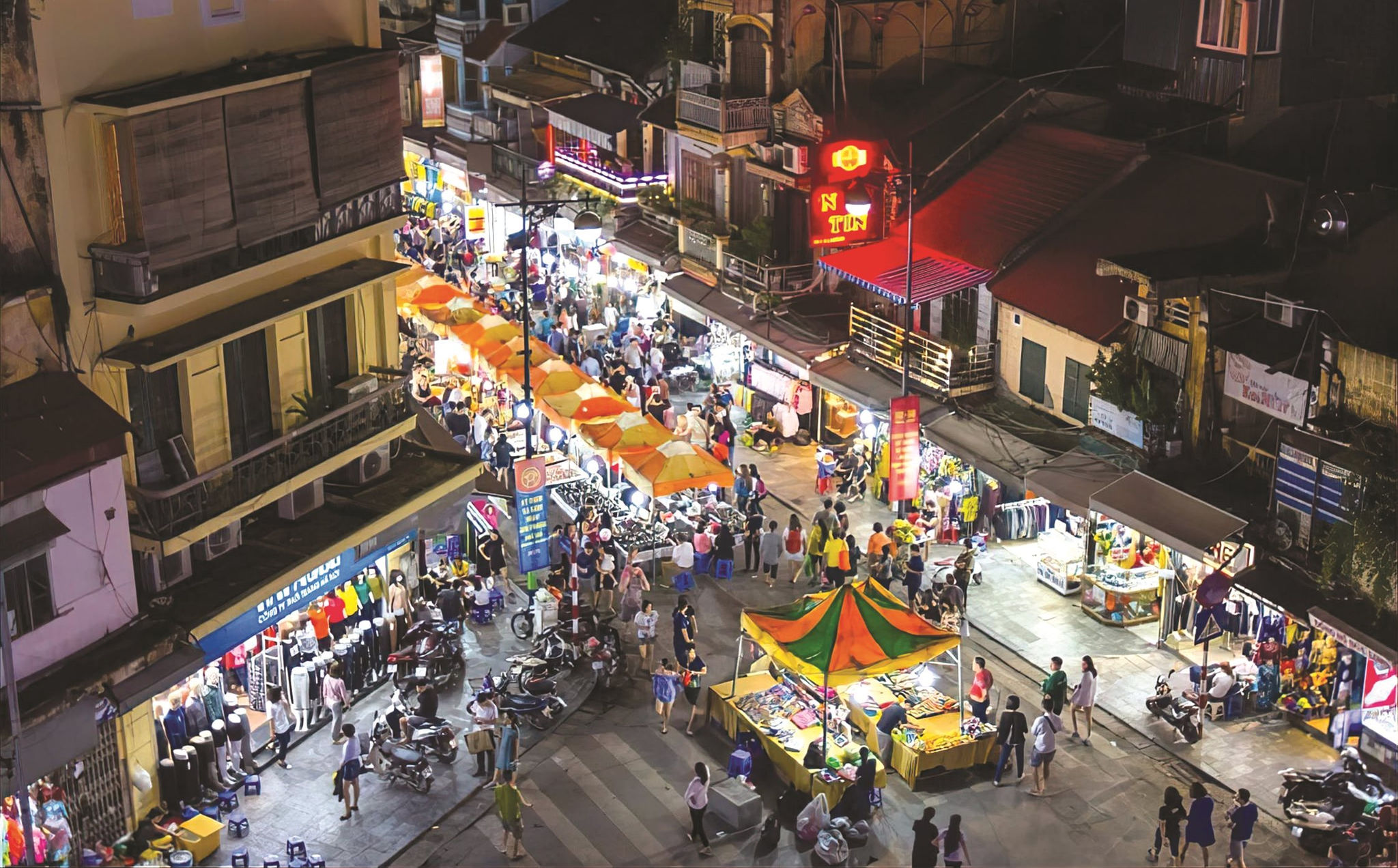 Cultural resources are considered the most outstanding advantage of Hanoi’s night economy, from the heritage system, architecture, street space to community life associated with Thang Long history. The city therefore aims to build the image of “heritage night, creative night”, taking cultural experience as the center and combining traditional elements with innovation. Forms such as ca tru, literary singing, cuisine, handicraft products and craft villages can become materials to create different products, both serving tourists and contributing to maintaining indigenous cultural life. By 2045, Hanoi aims to become a competitive night economic center in the region with the brand “City of night cultural experiences”. To achieve this goal, the city needs to continue to remove bottlenecks in infrastructure, planning, institutions and product connectivity, and more effectively exploit the value of heritage and creative industries. With a rich system of attractions, old town space, traditional art products and typical street cuisine, Hanoi has a great foundation to build diverse night-time economic models. Depending on the characteristics of each area, each commune and ward can choose appropriate spaces and types, but development needs to be organized in a unified, regulated and sustainable direction. Besides business goals, participating entities also need to ensure commercial civilization, urban order and harmony between economic benefits and the quality of life of the community.