
 English
 Tiếng Việt
 日本語
Six decades of cultivating the capital’s literary and artistic appearance
From the initial foundations After the Capital Regiment withdrew from Hanoi in February 1947, the city entered a period of temporary occupation with many difficulties for cultural and artistic activities. However, since around 1950, when more and more writers and artists returned, journalistic and literary life gradually had positive changes. A part of journalists also participated in writing, while press publications began to devote space to introduce poetry, stories and new compositions, creating conditions for young writers to try their hand.
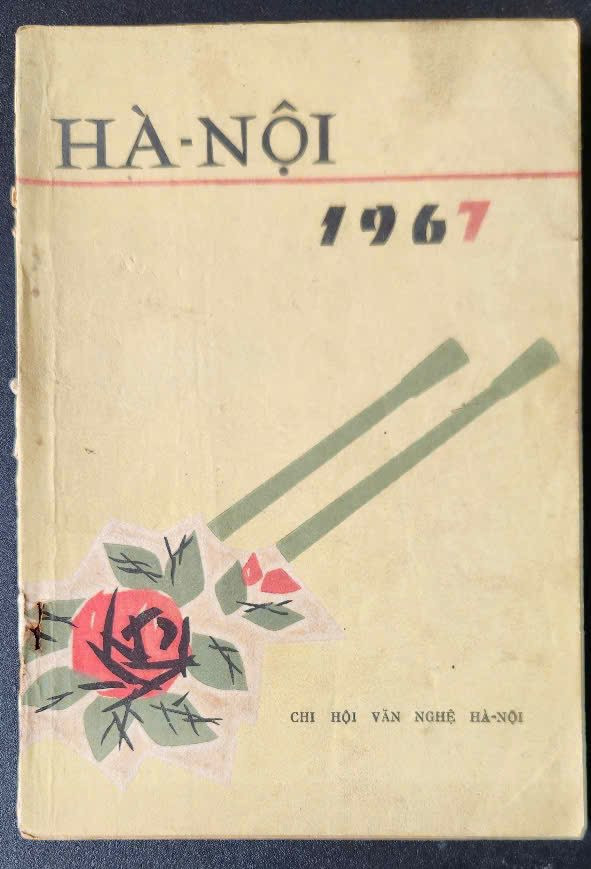
After the Capital was taken over in 1954, cultural and artistic activities were gradually restored. Theater art troupes, music and painting training establishments have been strengthened; The mass art movement also spread in many areas. During the period 1954–1966, before the Hanoi Arts Association was born, the Hanoi Department of Culture played a core role in organizing and mobilizing the movement, while also receiving support from central arts agencies. 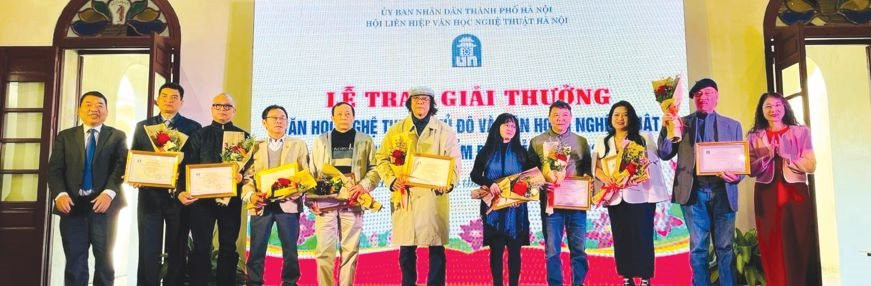 From these activities, Hanoi’s creative force is gradually gathered and developed. The Department of Culture established a Young Composers Club with about 50–60 collaborators, and also released publications such as Machine Voice, Singing Our Countryside, New Streets. With a compact format, each issue has 4 to 8 pages and is sent free to establishments, these publications introduce folk songs, poems, funny stories and vividly reflect the lives of people in the inner and suburban areas. In addition, many literary anthologies were also compiled and published, including two collections of short stories Night Rain, Along the River To, three volumes Hanoi People and several volumes of Memoirs of Hanoi with the participation in gathering and editing manuscripts of Hoang Cam, Le Bau, and Nguyen Dau. These efforts contribute to creating a creative environment, discovering new writers and promoting the need to form a professional organization capable of gathering and orienting literary and artistic activities to the Capital. In October 1966, the Hanoi Arts Association was officially established, marking an important development in the process of organizing the city’s creative forces. When it was first born, the Association had about 200 members, of which nearly two-thirds were amateur composers, the rest were professional artists working in the Central Government and Hanoi. Based on the core force of the Department of Culture and the support of the Central writers and artists, the Association gradually strengthens its organization and builds specialized departments.
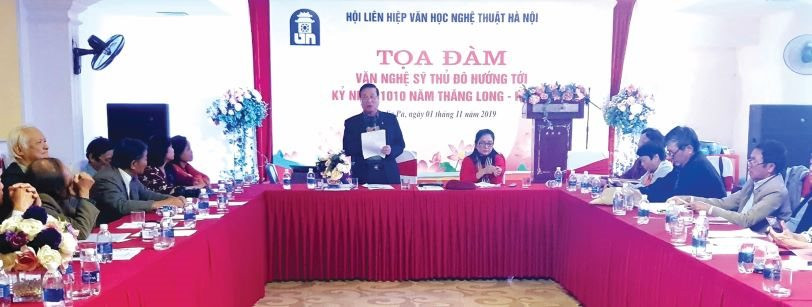 According to the recollection of writer Hoang Quoc Hai, when the Association came into operation, a number of officers and writers from the creative force of the Hanoi Department of Culture were transferred to work directly here, including Chu Ha, Le Bau, Huynh Tam Chi… To improve professional quality and create direction for the movement, the Association also invited many prestigious writers from the Central Government to join the Executive Committee such as Nguyen Tuan, To Hoai, Kim Lan, Nguyen Xuan Sanh, Anh. Tho, Ho Phuong, Nguyen Kien, Bui Hanh Can, Bui Huy Phon, Huyen Kieu, Bich Thuan, Mong Son… Poet Nguyen Xuan Sanh assumed the position of the first Secretary General. The presence of many famous names in the fields of literature, painting, theater, fine arts and music has created an important foundation for the organization’s activities in the following years. Sixty years of building value and affirming position Right from the early stages, the Hanoi Arts Association has focused on simultaneously developing creative activities, publishing and training the next force. Hanoi Creative Volume – the predecessor of Hanoi Nguoi Nguoi – was initially published once a quarter, then increased the frequency to one issue every two months. The publication gradually becomes a forum to introduce works and connect the capital’s creators. Professional training is also carried out regularly. For about a decade after its founding, almost every year the Association organized professional classes and creative camps lasting one to two months. The participants are quite diverse, from professional writers and artists to workers, technical staff, teachers and literature lovers. Thanks to that, around the years 1970–1972, the young creative force in Hanoi increasingly grew in number. During the resistance war against the US and the construction of socialism, creative training camps held annually contributed to arousing creativity in many classes of people, from workers and farmers to students and intellectuals. Many faces have grown up in this environment, such as director Doan Truc Quynh, screenwriter Luu Nghiep Quynh, writers Tung Dien, Do Bao Chau, Nguyen Thi Van Anh, Tran Hoang Bach, Nguyen Anh, Le Minh Khue, To Hai Van, Tran Van My… The works of short stories, medium stories, memoirs and memoirs of many authors are regularly published in the collection Hanoi People. Some compositions were also collected and published into books, typically Hanoi Chronicles (Hanoi Arts Association, 1971), Hanoi Those 12 Days and Nights (Literature Publishing House, 1973) and Unexpected Things (New Works Publishing House, 1977) – a collection of short stories written by 13 members on the topic of Hanoi’s industry. These publications not only reflect social life in each period, but also contribute to the formation of a new generation of authors and supplement resources for the Association’s publishing activities. Not only focusing on literary creation, the organization also promotes research and collection of folk culture, attracting the participation of many researchers and intellectuals such as Bui Van Nguyen, Vu Tuan San, Tran Quoc Vuong… Works such as Hanoi Famous People, Legend along the West Lake, Hanoi Proverbs and Folk Songs, Lo Khe Communal House Singing have contributed to preserving, systematizing and introducing the unique cultural values of the land of Thang Long – Hanoi. Evaluating the early stages of the organization’s formation, writer To Hoai, former Chairman of the Hanoi Union of Literature and Arts, once emphasized that the birth of the Association has created motivation for literary and artistic activities to develop in many aspects. Professional seminars, professional training classes, writing clubs, publishing, exhibitions and stage performances are organized one after another. Recognized city-level arts research projects and awards won by members at the Central Union level show the maturity of the Capital’s creative force. These comments are mentioned in the work Hanoi’s literary and artistic achievements and development orientation to 2010 (Hanoi Publishing House, 1996). Over time, the Association has gradually affirmed its role as an organization that gathers writers and artists, while creating an environment to nurture talent, improve professional qualifications and promote creativity. From a modest force, Hanoi’s literary and artistic team is increasingly growing in both scale and quality, leaving behind many valuable works and research projects on culture, people and urban life. An important milestone took place at the 7th Congress in December 1990, when the Hanoi Arts Association was transformed into the Hanoi Union of Literature and Arts. Chapters were reorganized into specialized associations, expanding the ability to gather creative forces in many fields of art. From about 200 initial members, the Association has now developed into an organization gathering more than 4,500 artists and writers, operating in 9 specialized associations including: Writers Association, Fine Arts Association, Photography Association, Cinema Association, Theater Association, Music Association, Dance Artists Association, Architects Association and Folk Arts Association. The process of organizational expansion is associated with the maturity of many generations of writers and artists. Among the members, there are big names in Vietnamese literature and arts, many of whom were awarded the Ho Chi Minh Prize and the State Prize for literature and art. Many members of Hanoi’s specialized associations also participate in specialized organizations at the central level, thereby enhancing the exchange, connection and contribution of the capital’s artists and writers to the country’s artistic life. According to poet Bang Viet, former Chairman of the Hanoi Union of Literature and Arts, the achievements of the Capital’s literature and arts are clearly demonstrated through many important historical periods. Those were the first years after the liberation of the Capital in 1954–1955, the opening of the resistance war against the US in 1965–1967, the B.52 victory in the battle of “Dien Bien Phu in the air” in 1972, the period of national unification in 1975–1976, and especially the Doi Moi work that began in 1986. At each stage, artistic creations bore the mark of the times. reflects social movements and human thoughts.
 The imprint of the team of writers and artists is shown in many fields, from literature, music, fine arts, photography to theater, dance, cinema, architecture and folk arts. Each type has authors and works that contribute to enriching the spiritual life of people, while spreading the image of Hanoi and Vietnamese culture to the masses. Notably, the compositions not only record the appearance of the city at each time but also preserve urban memories, reflect changes in social life and suggest contemporary human problems. The richness of topics, styles and methods of expression shows the adaptability and vitality of Hanoi’s literature and arts, as well as the role of this field in fostering cultural identity and building the spiritual life of the community. Behind the achieved results are the contributions of many generations of writers and artists with a spirit of commitment, a sense of professional training and responsibility towards society. Besides the class of experienced artists, young creators are continuing to seek new directions, innovate ways of expressing and promoting the values of truth – goodness – beauty, while expanding exchange and integration with contemporary artistic life. Towards a new stage of development
Entering the next stage, Hanoi’s literature and arts face many favorable conditions to expand creative space and strengthen connection with city life. Hanoi’s participation in the UNESCO Creative Cities Network creates more opportunities to promote creative industries, while also placing increasing demands on writers and artists to create works of artistic quality, community impact and the ability to promote the capital’s image. Along with that, the policy of developing the cultural industry opens up many new directions of activities associated with cinema, performing arts, photography, fine arts, exhibitions and traditional crafts. This is an opportunity for artists to exploit more resources, expand the public audience and bring their works closer to life. However, these movements also require innovation in operating methods, strengthening cooperation between creators and cultural institutions and social communities. According to People’s Artist Tran Quoc Chiem, to continue accompanying Hanoi’s development process, literature and art need to proactively innovate, closely follow real life and promptly reflect the city’s changes. Creative activities need to focus on discovering and encouraging positive factors, new models and achievements; At the same time, promote professionalism to make more practical contributions to the development of the Capital and the country. Looking back on the 60-year journey, besides outstanding achievements, the field of Hanoi’s literature and arts still has many problems that need to be resolved. State management still has inappropriate points; Physical facilities and technical infrastructure do not fully meet operational needs. The next generation force is not really abundant, while investment resources are still limited compared to the development requirements of Hanoi – a major cultural center of the country. That reality poses the need to build more favorable conditions for creative activities, from perfecting management mechanisms, increasing investment to developing teams and expanding public access to works. The development of literature and art in the new period therefore does not only stop at strengthening the organization, but also needs to create a sustainable creative environment, promoting interaction between artists, the community and social resources. According to the development orientation to 2031, vision to 2045, Hanoi Union of Literature and Arts determines to continue to innovate thinking, leadership and direction methods; Raise awareness and responsibility of party committees, Party organizations and leaders for literary and artistic activities. Along with that is improving the efficiency of state management, paying attention to resource allocation and promoting theoretical and critical research. The Association also aims to discover, train and foster a team of managers and consultants in the field of literature and arts; Review and improve mechanisms and policies; Strengthen the organization towards unity, streamlining, professionalism and efficiency. Propaganda and work promotion activities, international exchange and cooperation will continue to be emphasized, in order to both preserve the national cultural identity and enhance the integration ability of the Capital’s writers and artists. Six decades of construction and development have created an important foundation for the Hanoi Union of Literature and Arts to enter a new phase. The demands posed today require a team of writers and artists to constantly improve their creative capacity, maintain professional responsibility and proactively adapt to the rapid changes of urban life. Based on the values that have been built by many generations, Hanoi’s literature and arts are expected to continue to have more works rich in ideological depth, artistic quality and social influence. Thereby, this field not only contributes to enriching the spiritual life of the people but also continues to preserve cultural identity, stimulate creative resources and accompany Hanoi on its development journey in the new era.