
 English
  Tiếng Việt
 日本語
日本語Construction begins on the restoration of Kinh Thien Palace, continuing the journey of preserving Thang Long Imperial Citadel
On the morning of September 29, at the Thang Long Imperial Citadel Center Heritage Area – Hanoi, 9 Hoang Dieu, Ba Dinh ward, the groundbreaking ceremony of the investment project to preserve, repair and restore Kinh Thien Palace officially took place.
General Secretary and President To Lam and leaders of the Party, State, Hanoi city, ministries, departments, central and local branches attended the event. 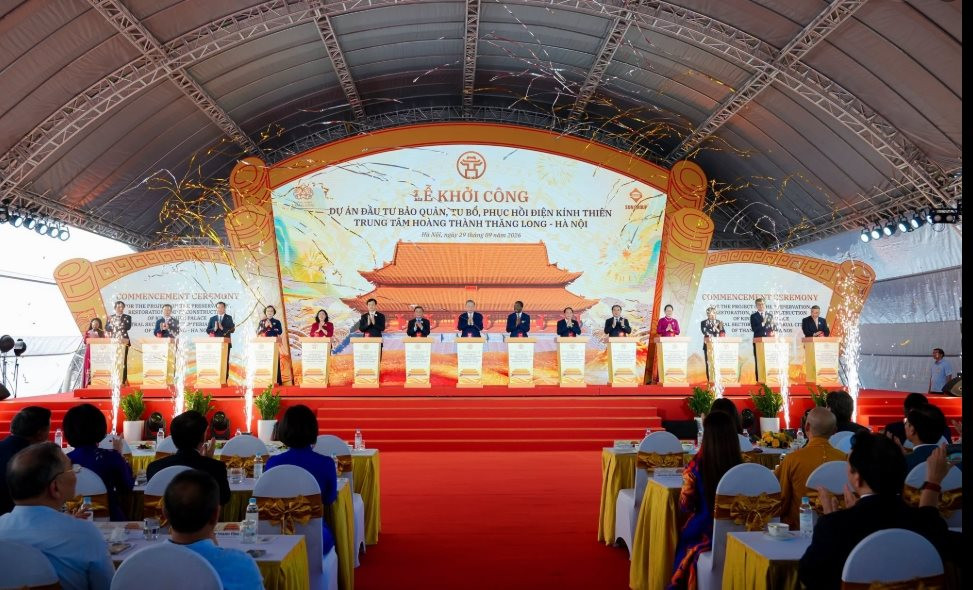
The ceremony is part of a series of activities of the Asia-Pacific Dialogue Conference on heritage and authenticity, taking place from September 27 to October 1, and is associated with the policy of the Hanoi Party Committee on implementing key projects on the occasion of major holidays in 2026.
About 70 international delegates were also present at the event, including Mr. Lazare Eloundou Assomo, Director of the UNESCO World Heritage Center; Ambassadors and heads of permanent delegations to UNESCO; representatives of international consulting organizations such as ICCROM, ICOMOS, IUCN and many domestic and foreign experts and researchers.
Kinh Thien Palace holds a special position in the structure of Thang Long Forbidden Citadel. This was once the most important main palace, where the Emperors reigned and was a symbol of Dai Viet national power under the Le Dynasty from the 15th to 18th centuries. 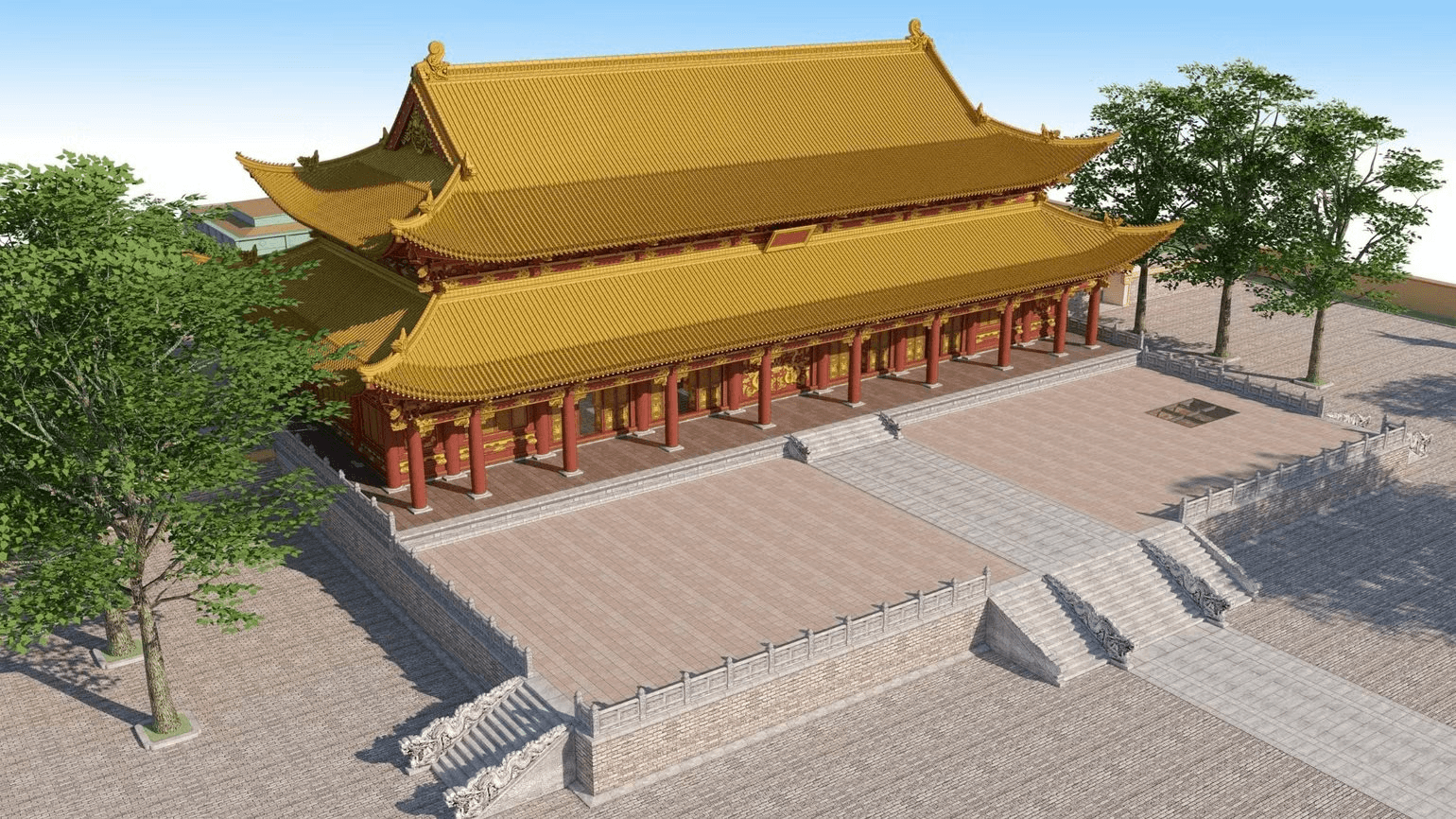
Space perspective of Kinh Thien Palace after restoration. Photo: Imperial Citadel of Thang Long
Many important royal ceremonies were held here, from coronation ceremonies, royal ceremonies to ceremonies for welcoming foreign envoys. The research and restoration of Kinh Thien Main Palace therefore not only aims to recreate an architectural work, but also contributes to clarifying the central space of power that has existed for many centuries in Thang Long Imperial Citadel. The project was prepared on the basis of 15 years of interdisciplinary research, including history, archaeology, architecture, intangible heritage and comparison with similar conservation models in the region. This is determined to be the key task that begins the vision of developing the Central Axis of Thang Long Imperial Citadel until 2035, and is also part of the long-term orientation of the Master Plan of Hanoi Capital with a 100-year vision. The project will be implemented in the period 2026 – 2030 with a total cost of more than 1,680 billion VND. Thang Long – Hanoi Heritage Conservation Center is the investor, while Sun Group is in charge of construction. The project scope has an area of about 10,700 m², including the foundation of Kinh Thien Palace, Dan Tri yard, the eastern, western, southern courtyards and the northern garden area extending to house D67. The main items include preserving, repairing and restoring the original elements of the monument; Restore Kinh Thien Main Palace and related auxiliary spaces; At the same time, complete the technical infrastructure system to serve the management, protection and exploitation of heritage values. Speaking at the groundbreaking ceremony, Chairman of Hanoi People’s Committee Vu Dai Thang emphasized that heritage preservation needs to be placed in the overall development strategy of the Capital. According to this orientation, the values ”Culture – Identity – Creativity” not only need to be preserved but also must become a resource for sustainable development. Because the project is located in the core area of the World Heritage Site and in an area containing many important archaeological cultural layers, the city requires the implementation process to strictly comply with scientific standards and professional conservation procedures. The investor and consulting, construction and supervision units must comply with the approved documents. If new archaeological elements are discovered or problems appear that do not have enough scientific basis for conclusions, the relevant area must be proactively zoned and scientists and experts consulted before continuing to handle. The view emphasized by the city is that progress cannot become a reason to affect the authenticity, integrity and long-term values of the monument. The Chairman of Hanoi People’s Committee also affirmed that each generation is only the recipient, protector and responsible for transmitting the values of the thousand-year heritage to future generations. 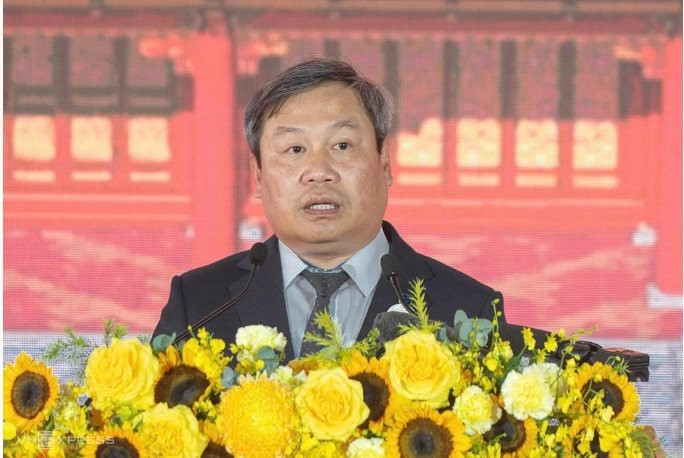
Evaluating the project preparation process from 2023, Mr. Lazare Eloundou Assomo, Director of the UNESCO World Heritage Center, noted the research, documentation and consultation work related to the restoration of Kinh Thien Palace. 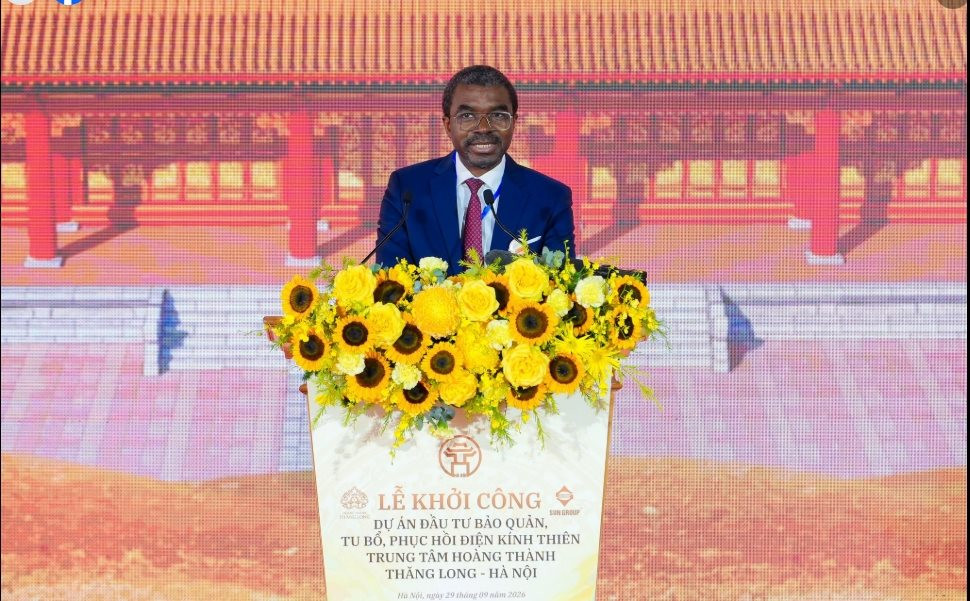
According to him, protecting Thang Long Imperial Citadel is not only meaningful to the history and identity of Vietnam but also contributes to helping future generations better understand the values that the heritage site brings in the process of human history. After the groundbreaking ceremony, General Secretary and President To Lam and delegates visited the exhibition space about the authenticity of the restoration process of Kinh Thien Palace. When completed, the project is expected to contribute to a clearer representation of the central space of Thang Long Imperial Citadel, improve historical interpretation, create more experiences for visitors and bring the value of more than a thousand years of civilization of Thang Long – Hanoi closer to the domestic and international public. Kinh Thien Palace was built in 1428 under the reign of King Le Thai To on the foundation of the palaces of the Ly – Tran dynasties and continued to be completed under the reign of King Le Thanh Tong. For many centuries, the building served as the main hall of the Forbidden Citadel of Thang Long, where important royal ceremonies of the Dai Viet nation took place. In 1816, King Gia Long built Long Thien Palace as a palace in this area. In 1886, the structure was destroyed by the French government to build a military base. The remaining vestiges today mainly include the palace foundation and a system of dragon-carved stone steps dating from the 15th century. On August 1, 2010, Thang Long Imperial Citadel Central Area was registered by UNESCO as a World Cultural Heritage, opening a new phase in research and conservation activities of the heritage site. From an exploration of about 100 m² around the dragon shelf area in 2011, archaeologists discovered many traces of foundations, beams and brick floors from different historical periods. By 2022, the total excavation area in the central area has expanded to more than 10,000 m². Research results show that the Kinh Thien Palace foundation area has cultural strata up to 6 m thick, preserving successive layers of relics from the Dai La period, through feudal dynasties to the Nguyen period and modern times. These layers of vestiges spanning more than 1,300 years are an important basis for the process of researching, preserving and gradually restoring the central space of Thang Long Imperial Citadel in the new period.