
 English
 Tiếng Việt
 日本語
The generation that grew up with smartphones and the paradoxes of modern youth
“iGen – Smartphone Generation” is a psychological and sociological research project focusing on iGen, the generation born from the mid-1990s to the mid-2000s and grown up with smartphones and social networks. Based on survey data of more than 11 million young people and many psychological studies, Jean M. Twenge analyzes changes in the way this generation learns, communicates, builds relationships, views themselves and envisions the future.
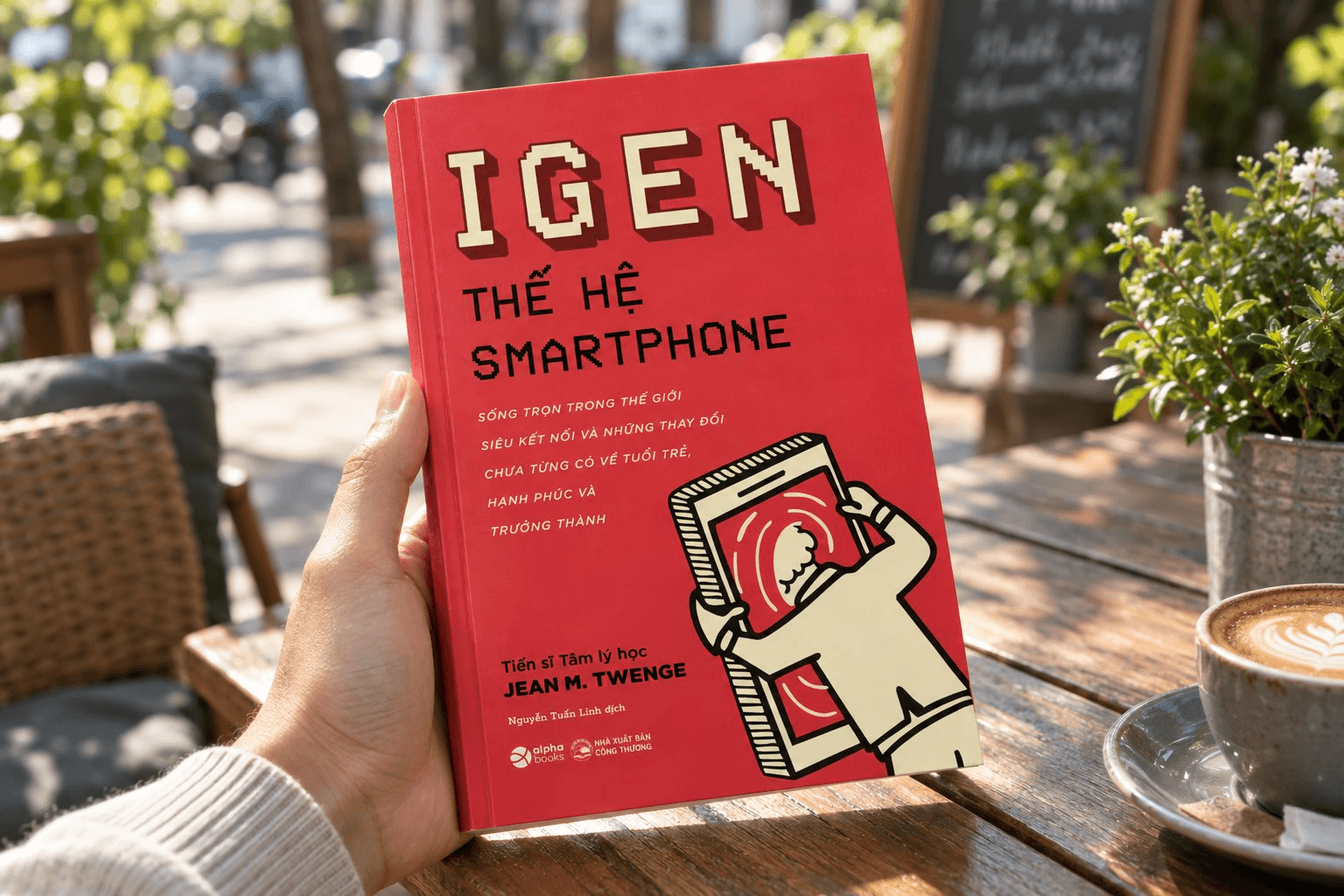
Instead of associating young people with familiar stereotypes such as being impatient, weak or too dependent on technology, the author places the manifestations of iGen in relation to previous generations and the changed social environment. Thereby, the book points out a remarkable paradox: young people today tend to be less rebellious, more open to differences, but at the same time are also more likely to face feelings of loneliness, anxiety and mental health instability. A notable point in Jean M. Twenge’s approach is the use of data to explain differences between generations instead of relying on subjective feelings. When living conditions, the way parents raise their children, the educational environment and communication methods change, young people’s behavior also changes. Therefore, to understand iGen, we cannot just look at what they do differently from previous generations but need to consider the social factors that have contributed to those changes. One of the outstanding issues that the book addresses is the paradox between the growing ability to connect and the increasingly evident feeling of loneliness. Smartphones allow young people to constantly stay in touch with friends, reach communities with similar interests and express themselves online. However, online interactions cannot always replace the closeness that results from face-to-face meetings and conversations. As screen time increases, time spent socializing in real life may shrink. At the same time, social networks create an environment where young people often see images of other people’s appearances, successes, lives and experiences, thereby easily falling into a state of self-comparison. Seemingly perfect images online can make some people doubt their own worth or feel their lives are less attractive than what they see on screen. Likes, comments, or followers may create a feeling of being cared for, but they may not bring true sympathy when a person is in trouble. A person can chat with many people online but still lack a deep enough relationship to share private matters. However, the book also shows that it would be one-sided to attribute all of iGen’s psychological difficulties to technology, because mental health is also influenced by family, education and broader social changes. Besides the story about technology and mental health, Jean M. Twenge also analyzes the trend of young people growing up more slowly. In families with better living conditions and smaller sizes, parents are often able to spend more time and resources to care for and protect their children. That care comes from love, but if young people have few opportunities to solve problems, take responsibility or experience necessary conflicts, the process of forming independence can take place more slowly. According to the book’s approach, adulthood is not only determined by age or completing familiar milestones such as going to work, getting married or moving out. More important is the ability to make your own decisions, take responsibility for your own choices and adapt to changes in life. However, the author does not automatically consider late adulthood as a negative sign, because the time to get married, start a family or start an independent life depends on the economic conditions and life concepts of each generation. With 408 pages, “iGen – Smartphone Generation” targets many groups of readers, from young people, parents, teachers to researchers and managers. In the field of education, analysis of concentration, face-to-face communication and mental health can help teachers and schools find more suitable approaches to students in the digital environment. For parents, the book provides more data to see their children’s changes in relation to the environment in which they are growing up. For young people themselves, the work suggests an opportunity to look back at their technology usage habits, identify the pressures that are affecting their lives and evaluate the quality of their relationships. Smartphones and social media need not be seen as the sole cause of modern problems, but how technology is used, how much time is spent on screens, and how real-life relationships are maintained are questions that deserve attention. The book is mainly based on research on American society, so the results presented need to be received in a specific context instead of being applied entirely to Vietnamese teenagers. Family conditions, educational environments and cultural backgrounds between the two societies have many differences. Scientific data can help identify trends across an entire generation, but understanding an individual still starts with listening to that person’s specific circumstances, experiences, and difficulties. “iGen – Smartphone Generation” therefore does not try to provide a simple solution to all the problems of youth. The book suggests a perspective in which young people are placed in the social context in which they live instead of being judged solely by the standards of previous generations. Behind the always bright phone screens and constant online conversations can still be pressures that are difficult to share, worries that cannot be named, and the awkwardness of entering the adult world. The remarkable message the book suggests is not to turn away from technology, but to find ways to live with technology without letting it completely replace real connections between people. As smartphones have become an inseparable part of modern life, it is more necessary to help young people build self-control, maintain healthy relationships and keep a balance between the online world and real-life experiences. Dr. Jean M. Twenge currently teaches psychology at San Diego State University and has many research works published or featured in Time, USA Today, The New York Times and The Washington Post. She is also the author of many books such as “Generation Me: Why Today’s Young Americans Are More Confident, Assertive, Entitled – and More Miserable than Ever Before”, “The Narcissism Epidemic: Living in the Age of Entitlement” co-authored with W. Keith Campbell and “The Impatient Woman’s Guide to Getting Pregnant”.