
 English
  Tiếng Việt
 日本語
日本語Pho is not just a dish, it is also a story about history and culture
On October 11, in Hanoi, Hanoi Department of Culture and Sports and Urban Economics Newspaper organized a discussion “Noodle soup – stories from intangible cultural heritage to creative industries” with the participation of researchers, artisans, culinary experts, businesses…
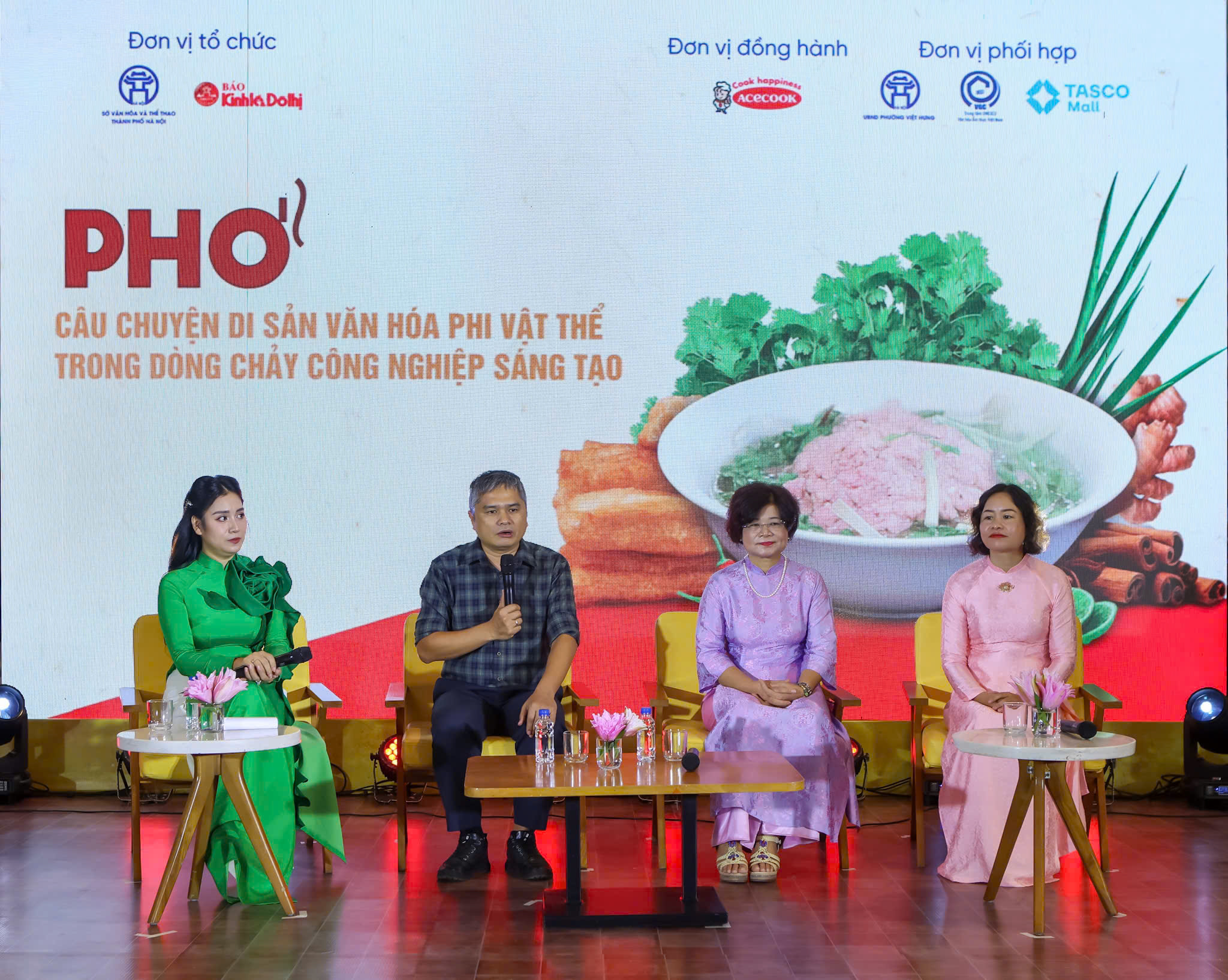
Dr. Pham Cao Quy, Deputy Head of Intangible Cultural Heritage Management Department, Department of Cultural Heritage shared at the seminar
In her opening speech, Ms. Le Thi Anh Mai, Deputy Director of the Hanoi Department of Culture and Sports, emphasized: “Hanoi Pho is the crystallization of folk knowledge, processing skills and typical enjoyment habits of Hanoi people. Each bowl of pho contains the quintessence of the capital’s culture, reflecting the length of history, ingenuity and sophistication in Hanoi’s culinary culture.”
In 2024, the folk knowledge “Hanoi Pho” will be included in the National List of Intangible Cultural Heritage by the Ministry of Culture, Sports and Tourism. This is not only the State’s official recognition of the cultural, historical and scientific value of this dish, but also sets new requirements in the work of preserving, teaching, promoting and promoting heritage values in the context of globalization. Pho being registered is an important milestone, affirming the position of Hanoi cuisine in particular and Vietnam in general on the world cultural map.
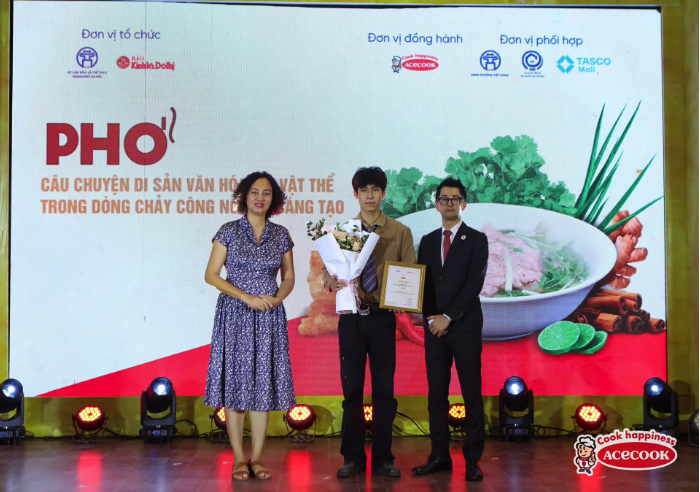
Ms. Pham Thi Thanh Huong, Head of the Cultural Science Department (UNESCO Office in Vietnam) and Mr. Yokoyama Hiroya, Deputy Director of Marketing of Acecook Vietnam Joint Stock Company awarded the prize to contestant Nguyen Quang Minh who won first prize in the contest “Sketch about the intangible cultural heritage of Pho”
According to Ms. Le Thi Anh Mai, in the cultural industry development strategy, traditional cuisine is a potential creative industry, contributing to building the tourism brand and city image. Pho – with its own cultural, historical and symbolic values - is a “typical representative” of the ability to connect between heritage and creativity, between tradition and modernity.
Dr. Pham Cao Quy, Deputy Head of the Intangible Cultural Heritage Management Department, Department of Cultural Heritage, said that Vietnamese cuisine is a rich, diverse and symbolic treasure.
Pho is not just a dish, but a fascinating story about history, culture, exchange and acculturation between regions. Heritage registration not only helps preserve folk knowledge but also creates conditions for the community, the subjects of heritage, to improve their livelihoods and affirm the value of their labor and creativity.
According to Dr. Pham Cao Quy, it is the combination of heritage preservation and community economic development that is the core factor that helps Hanoi pho continue to spread and adapt without losing its identity.
Director of the Hanoi Institute of International Studies and Training, University of Social Sciences and Humanities, Hanoi National University, Le Thi Thu Huong, said that content about Hanoi pho and traditional cuisine has been included in the training program, especially in the fields of tourism, culture, journalism and international relations. Teaching about culinary heritage not only helps students understand the cultural values of their homeland but also equips the younger generation with communication skills and promotes Vietnamese culture to the world.
Mr. Yokoyama Hiroya, representative of Acecook Vietnam, expressed his desire to join Hanoi in making pho a representative intangible cultural heritage of humanity. “We are deeply aware that every bowl of pho introduced, every activity associated with pho performed, is part of the journey to preserve and spread traditional cultural values…” – Mr. Yokoyama Hiroya emphasized.
Pho is one of the favorite dishes of Hanoi people. According to many historical records, pho appeared in Hanoi in the early twentieth century. Initially, it was a street gift, carried around the streets. Each pho stall is small but contains a story about the ingenuity, creativity and working spirit of the people of Hanoi.
Over time, pho has transcended the boundaries of an everyday dish to become a cultural symbol of the Capital. Heirloom pho brands with more than two or three generations of successors still retain the traditional flavor.