
 English
  Tiếng Việt
 日本語
日本語Guide to exploring Mang Den: Land of mist, pine trees and peaceful villages
In the middle of the vast Central Highlands, Mang Den appears like an enchanting note, where the mist hangs, the pine trees ring and time seems to slow down. Not only does it attract tourists with its poetic beauty, Mang Den also contains within itself the charm of a rapidly changing land. This place retains its wildness while gradually taking on the appearance of a potential eco-tourism destination. Coming here, people not only find peaceful scenery but also feel the clear breath of the plateau, the people and the rich culture of the Central Highlands.
Located at an altitude of about 1,200 m above sea level, Mang Den commune (Quang Ngai) is covered in mist all year round. During the day, the temperature is only about 16-18°C, but when night falls, cold air creeps through each pine canopy, covering the small roads. Therefore, visitors coming here often prepare warm clothes to fully enjoy the chilly atmosphere typical of the highlands.
In recent years, Mang Den has become a favorite destination for many tourists thanks to its poetic scenery, fresh climate and rare peacefulness. Many people also compare this place to “the second Da Lat of the Central Highlands”.
WHICH SEASON IS BLACK MANPADS THE MOST BEAUTIFUL?
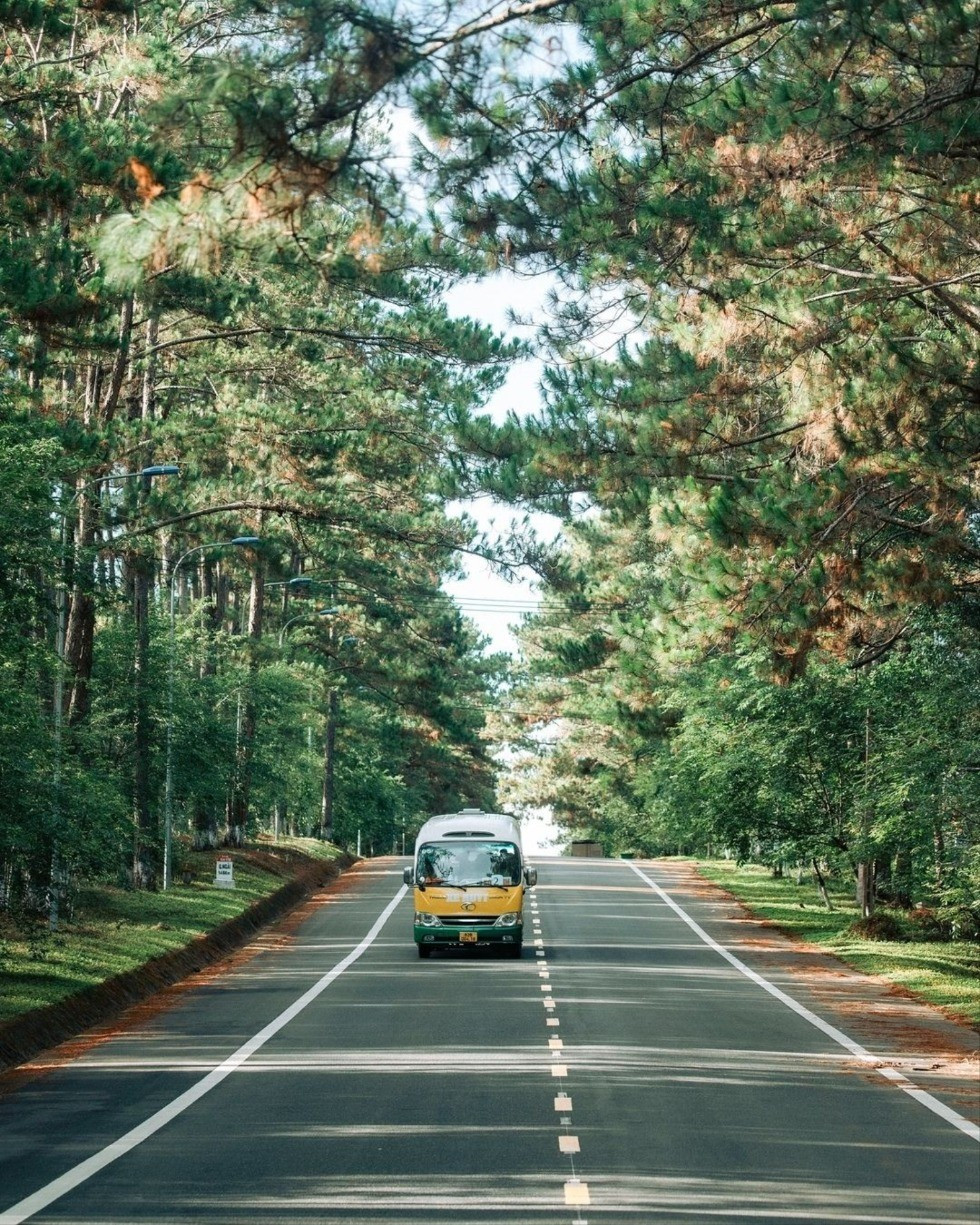
Located at the gateway to Mang Den town, the pine road appears like a green silk strip across the vast mountains and forests. Rows of tall pine trees stand straight on both sides, their foliage spreading wide, creating a natural dome that provides shade all year round.
Mang Den is considered a beautiful place all year round, but the most exciting tourist season is from October to December. At this time, the weather is cold with a little warm sunshine, the air is dry and pleasant, creating a picture of the plateau that is both clear and romantic. During the New Year, Mang Den is resplendent in the color of cherry blossoms, dyed pink all over the hillsides and slopes.
Each season, Mang Den has its own beauty with a variety of flowers blooming all year round.
In February, this land lights up with bright yellow banyan flowers and mimosa; March – April, the space is filled with purple phoenix; Then comes the season of purple myrtle flowers spreading across the mountainside. When June comes, Mang Den puts on the golden shirt of the ripe rice season, blending with the majesty of the mountains and forests, creating a scene that is both poetic and peaceful.
From July, Mang Den officially enters the rainy season with persistent rains or sometimes heavy rains in the morning or afternoon, covering the town with a layer of mist and bringing a quiet, tranquil beauty different from the previous dry, sunny months.
MOVE
From Hanoi, visitors should choose the air route because the distance is quite far, about 1,100 km. Pleiku Airport (Gia Lai) is the nearest destination, about 100 km from Mang Den, it takes about 2 hours for passengers to travel by car.
From Ho Chi Minh City, visitors can drive along Highway 14, a distance of about 600 km, passing through Binh Phuoc, Dak Nong, Dak Lak and Gia Lai. In addition, many bus companies depart from Mien Dong Bus Station such as Long Van, Minh Quoc, Phong Phu, Phuong Thu… with ticket prices from 250,000 – 450,000 VND, travel time about 10 – 12 hours.
From Kon Tum ward, visitors can choose a taxi, bus or rent a self-driving car to get to Mang Den, a distance of only about 60 km, convenient for a day trip or an overnight stay.
STAY
As a small commune in the middle of a large forest, Mang Den does not have too many large hotels, but visitors can still easily find comfortable places to stay close to nature. Golden Boutique Hotel is the most prominent 4-star hotel that visitors can refer to. Besides, Dak Ke Mang Den meets 3-star standards, with a variety of room types suitable for groups of friends or families.
However, homestay is still the most popular choice in Mang Den, because it is cozy, close to nature, and reasonably priced. Through surveys, room prices range from 300,000 – 800,000 VND/night, while dorm rooms range from 150,000 – 250,000 VND/bed.
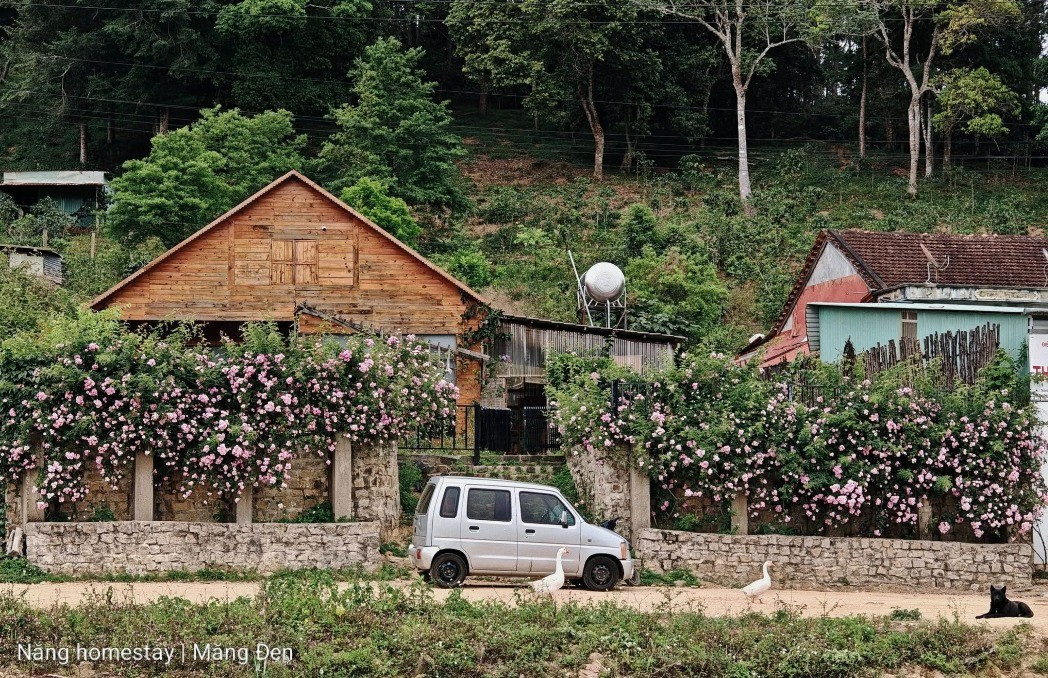
Many homestays are beautifully designed with highland features such as Toki, Paradiso, May Lang Thang, Sun Homestay, Nang, Osaka, T Rung Homestay, Gemstone Villa Mang Den… providing a peaceful space, suitable for tourists who want to fully enjoy the slow pace of life of this land.
TOURISM DESTINATION
Coming to Mang Den, visitors not only enjoy the fresh air and chilly days among the pine forests, but also discover a series of destinations with pristine and peaceful beauty. Below are some attractive tourist destinations that visitors should not miss.
Pa Sy Waterfall
Pa Sy waterfall eco-tourism area spreads over an area of 25 hectares, planned in harmony between natural landscape and indigenous cultural space. Inside the campus is a system of winding paths through the forest, traditional communal houses, handicraft workshops, cultural galleries and farms growing green vegetables and flowers all year round.
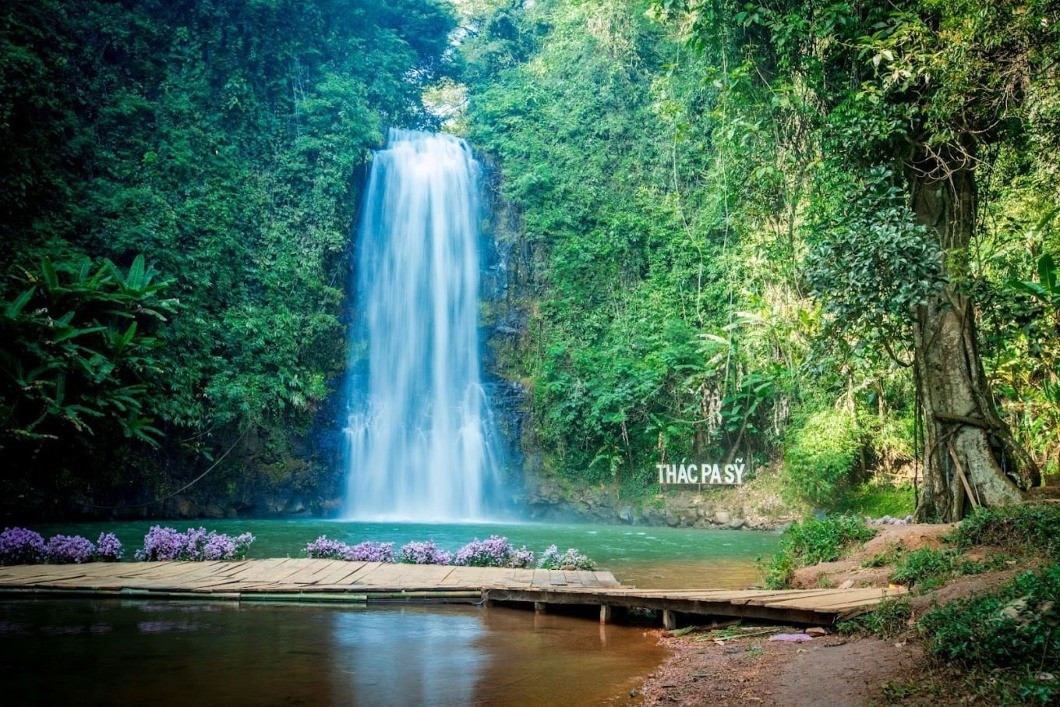
The highlight of the whole area is Pa Sy waterfall, located at an altitude of about 1,500 m above sea level. The majestic waterfall is formed from the three largest streams in Mang Den, so the locals call it Pau Suh, meaning “three streams forming one stream”. This is a symbol of harmony between heaven and earth, mountains and forests and people in the Kon Tum plateau.
Dak Ke Lake
Dak Ke Lake’s original name is Toong Ro Poong Lake, located right in the center of Mang Den town, with an area of about 3 hectares. The calm lake surface reflects the green pine forests, making it an ideal stopover for tourists coming to this highland region. Currently, the area around the lake has been invested in with many entertainment services such as boating, duck riding, fishing, and enjoying local cuisine, providing a relaxing experience in a fresh space.
An interesting feature is that visitors can rent buffalo carts or horse carts to walk around the lake, admire the scenery and feel the slow pace of life typical of Mang Den. In the summer, a series of purple poinciana blooms, dyeing the water’s surface purple, and in winter, the cherry blossoms are covered in romantic pink, turning Dak Ke Lake into a poetic natural picture in the heart of a small town.
Khanh Lam Pagoda
Khanh Lam Pagoda is one of the prominent spiritual destinations of Mang Den, located on a 10-hectare area of land, at an altitude of about 1,200 m above sea level. From the foot of the hill, visitors follow more than 200 stone steps through the three-entrance gate, the pagoda gradually appears in the middle of the pine forest, the tiled roof hidden under the cool green trees.
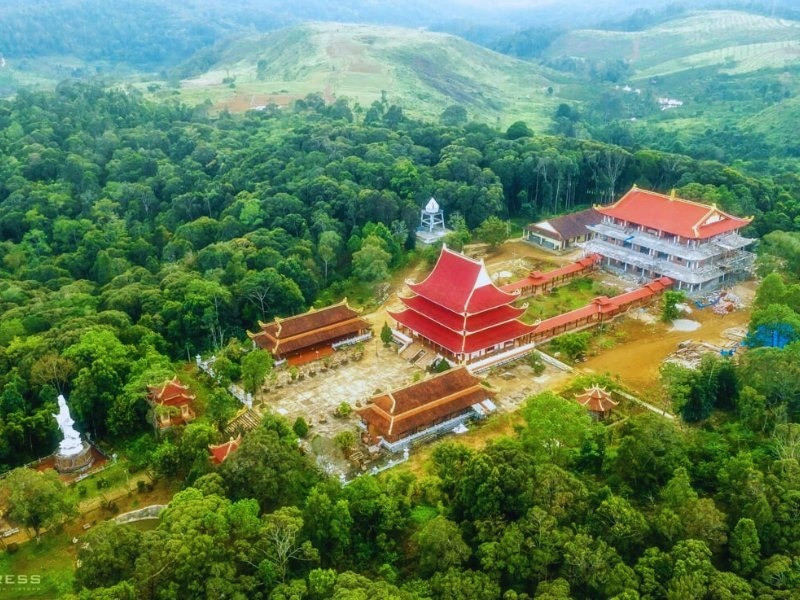
Standing out among the green space is the majestic three-storey main hall, a harmonious combination of traditional pagoda architecture and Central Highlands communal house. In front of the main hall is a 17 m high statue of Avalokiteśvara Bodhisattva, facing the quiet lotus pond. Along with the bell tower and drum tower on both sides, this architectural complex creates a peaceful space, blending Zen with the natural beauty of Mang Den.
Walking street
Mang Den Walking Street, also known affectionately as Sunset Boulevard, is located on Vo Nguyen Giap Street, right in the center of the commune. This place is the most vibrant combination of tourism, resort and culinary space in Mang Den. At the same time, it also brings together a system of hotels, restaurants, and cafes that are modernly designed but still in harmony with the plateau landscape.
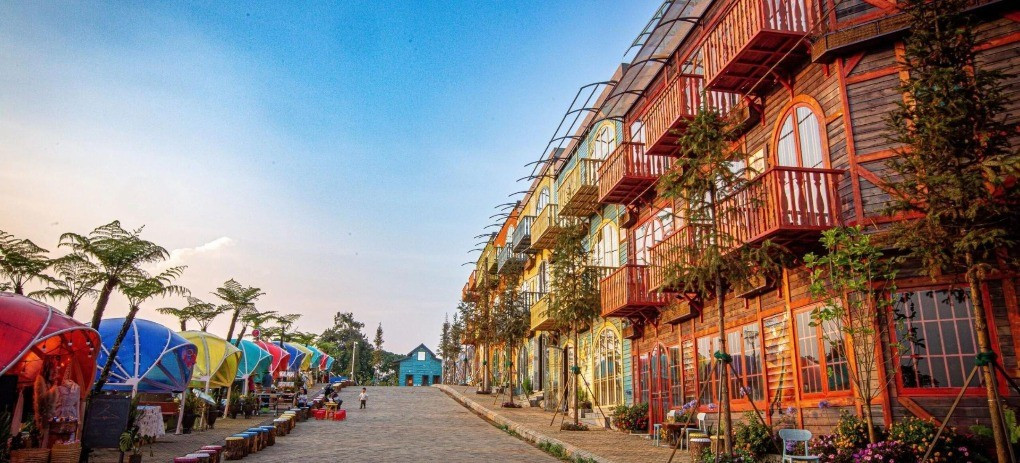
Amidst the scenery of green mountains, blue water, and clouds, the walking street becomes an ideal meeting place for tourists to stroll, relax and enjoy the typical cuisine of Mang Den. When sunset falls, golden sunlight covers the small roofs, making the space even more poetic.
Kon Pring village
Kon Pring village is one of the four most unique community cultural tourism villages of Mang Den, attracting a large number of tourists who want to explore the pristine beauty of indigenous culture. More than 90% of the village’s residents are M’nam people, an ethnic minority that has long lived in the land of (former) Kon Tum.
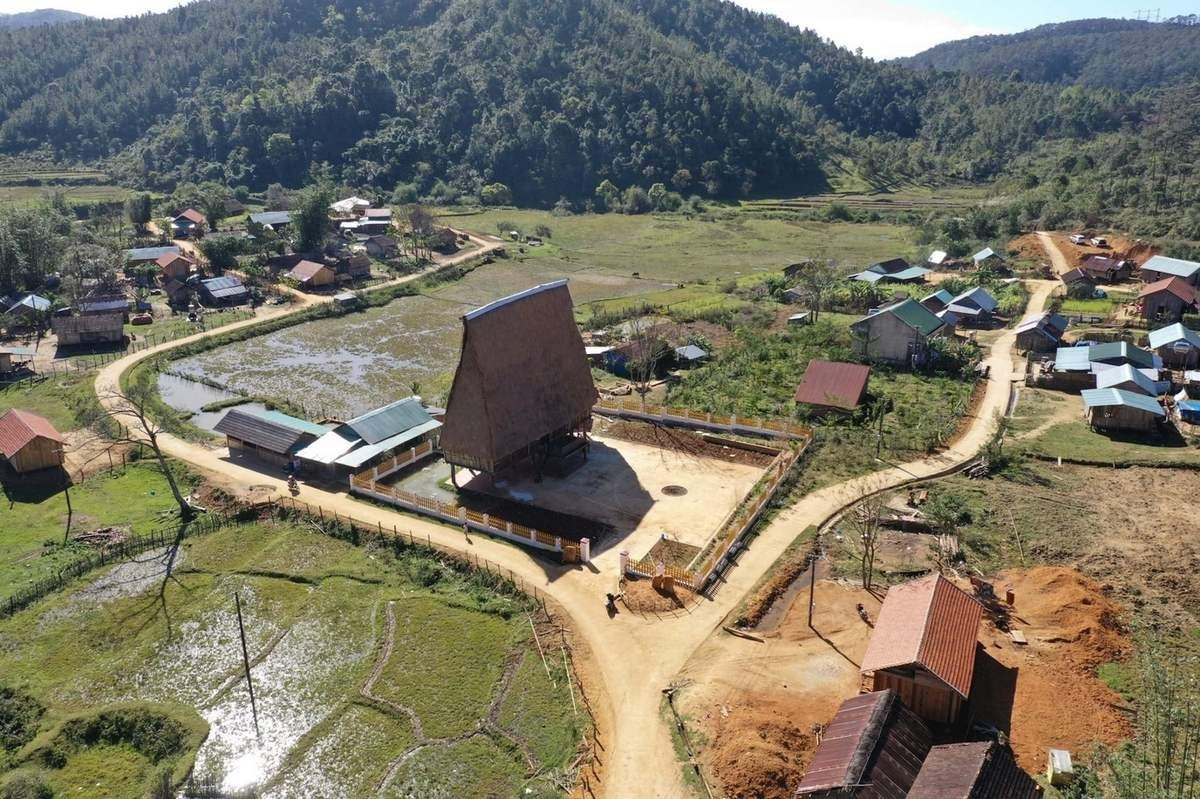
The village still preserves many traditional values through the images of stilt houses, communal houses, the echoing sound of gongs, and the craft of making wine, brocade weaving, and wickerwork. Coming to Kon Pring, visitors will not only admire the unique cultural space of the Central Highlands, but also have the opportunity to interact and experience the daily life of local people, and fully feel the hospitable and sincere spirit of the Mang Den people.
Dambri Lake
This is one of the destinations not to be missed when traveling to Mang Den, and is also the largest freshwater lake in the commune. Located amidst the lush green mountains and forests, Dambri Lake has a wild and peaceful beauty with a calm water surface reflecting the pine forest and clouds drifting lazily overhead.
Not only has the poetic landscape, Dambri Lake eco-tourism area also attracts tourists with rich local cuisine, gathering many highland specialties. Here, visitors can relax by the lake, enjoy rustic dishes, or participate in a fishing experience.
Experience picking vegetables and fruits at farms
Mang Den is planned to develop clean agricultural farms, specializing in growing organic vegetables and fruits. Here, visitors can pick and enjoy fresh fruits right in the garden such as oranges, green grapefruit, avocados, tomatoes, strawberries, melons, or admire the brilliant beds of chrysanthemums and lilies. In particular, most farms do not charge entrance fees. But customers only have to pay for the agricultural products they want to bring home.
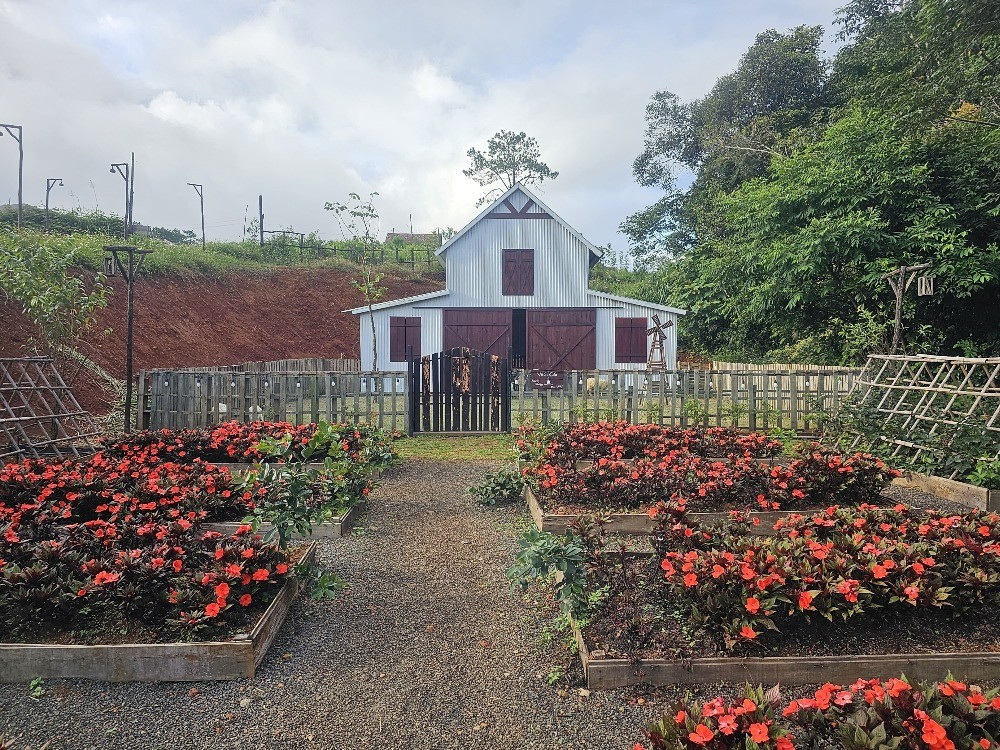
Some places that many tourists love include: E Ban Farm, Orfarm, Biophap, Mang Den Xanh Farm, Tam An Organic Farm, Hung Ly Garden…
Statue of the Virgin Mary
The statue of Our Lady of Mang Den is located on a peaceful hill, about 60 km from the center of Kon Tum ward and just over 1 km from the administrative center of Kon Plong district to the east. This is one of the most sacred destinations of Mang Den, where tourists and pilgrims come to pray and find peace of mind.
Discovered in 2004, the statue of the Virgin Mary still exists quietly among the vast mountains and forests, covered with moss over time but exuding a sacred and benevolent look. Amidst the vast space of green pines and mist, Our Lady of Mang Den has become a symbol of faith and kindness, and is an indispensable stop on the journey to explore the Kon Tum highlands.
Wooden statue garden
Mang Den Sculpture Garden was built in 2013, located near the Pa Sy waterfall area on a hillside with more than 1 hectare of primeval forest. Amidst the green space and winding stone paths, the garden impresses with 100 wooden statues directly crafted by 33 artisans who are ethnic minorities in the (former) province of Kon Tum.
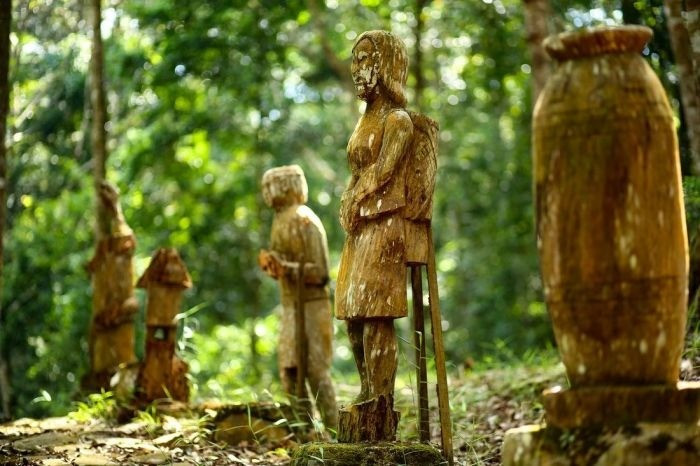
Each statue tells a rustic story, reflecting the working life and daily activities of residents of the Northern Central Highlands: a man holding an ax, hunting, smoking; Women pound rice, weave cloth, hold children, and go to the fields; Next to it are images of people playing music and drinking wine in traditional festivals. In addition to human statues, the garden also has statues of animals familiar with mountain and forest life such as birds, dogs, cats, pigs, monkeys, snakes, elephants…, all of which are meticulously carved, imbued with the breath of indigenous culture.
DISCOVER THE SPECIALTIES OF BLACK ASPARAGUS
Amidst the cold and peaceful space of the plateau, Mang Den cuisine has a simple but attractive character. Not only are the dishes that warm the hearts of visitors in the cold weather, the specialties here also fully reflect the culture, people and lifestyle of Kon Tum. From the rustic mountain flavors to the delicate preparation, each dish tells a unique story about the nature and people of Mang Den.
Sturgeon hotpot
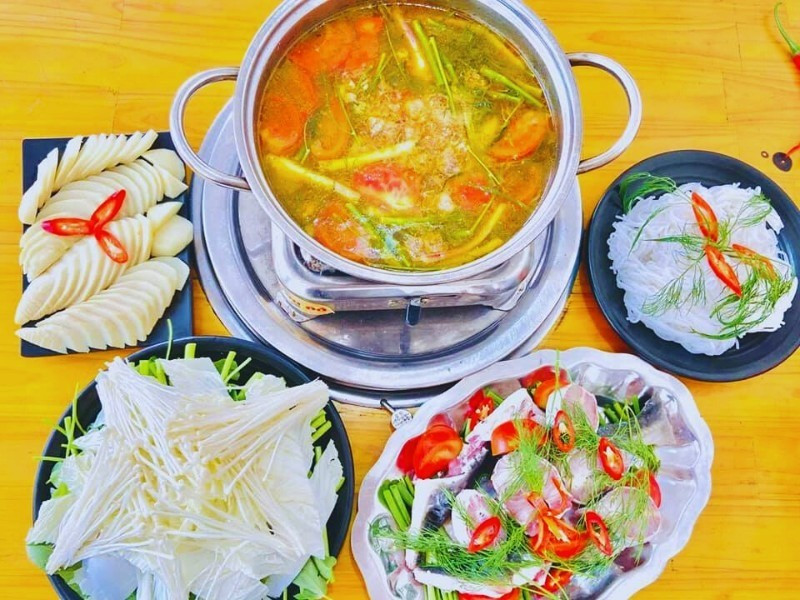
Coming to Mang Den, visitors can hardly miss sturgeon hotpot, a specialty dish associated with the cold climate of the highlands. Each piece of white, pink and firm fish, when dipped in the slightly sour and sweet hot pot broth, creates a harmonious and rich flavor. Enjoying sturgeon hotpot over a pot of steaming boiling water in the cool space of Mang Den is an experience that anyone who has ever tasted it will remember forever.
Pepper-piercing hot pot
In the foggy weather, spicy hot pot with pepper is a “memorable” dish for many tourists. The hot pot broth is stewed from vegetables and herbs such as red apples and goji berries, with a naturally sweet taste. The dish has the same form as Sichuan hot pot with two compartments: spicy and non-spicy. To fully experience the typical delicious taste, visitors should try the spicy hot pot that is warm in the middle of the highland weather.
Grilled chicken – lam rice
Grilled chicken with bamboo tube rice is a dish imbued with the soul of the Mang Den mountains and forests. The chicken is raised naturally, the meat is firm, marinated with wild pepper, lemongrass, chili and then grilled over charcoal until the skin is golden and crispy, the meat inside is soft and sweet.
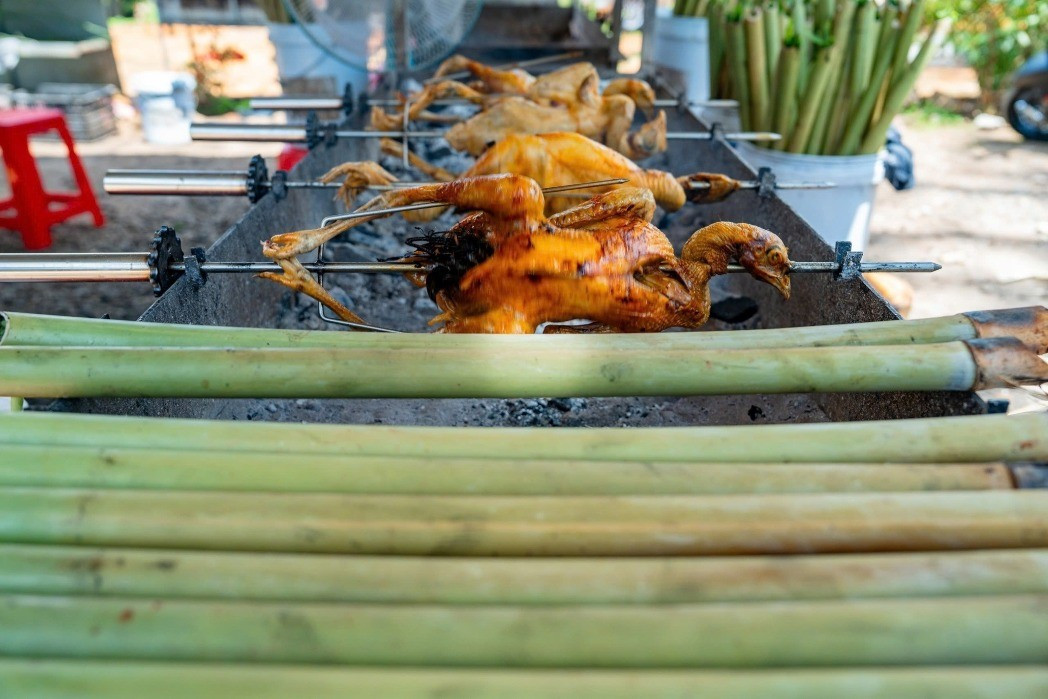
Free-range chicken grilled to a golden brown over charcoal, served with fragrant sticky rice, bringing a rustic yet unforgettable flavor
Chicken dishes are often eaten with fragrant sticky rice, dipped in sesame salt or peanut salt, creating a simple but unforgettable combination.
Snakehead fish soup cake
A rustic dish that is very popular with tourists is Mang Den snakehead fish soup. Each portion is cooked directly in a small pot on the stove and then served, always hot and fragrant. A bowl of noodle soup with large pieces of snakehead fish, soft chewy noodles and rich sweet broth brings a warm feeling in the cold highland weather.
Dried chicken salad with bamboo shoots
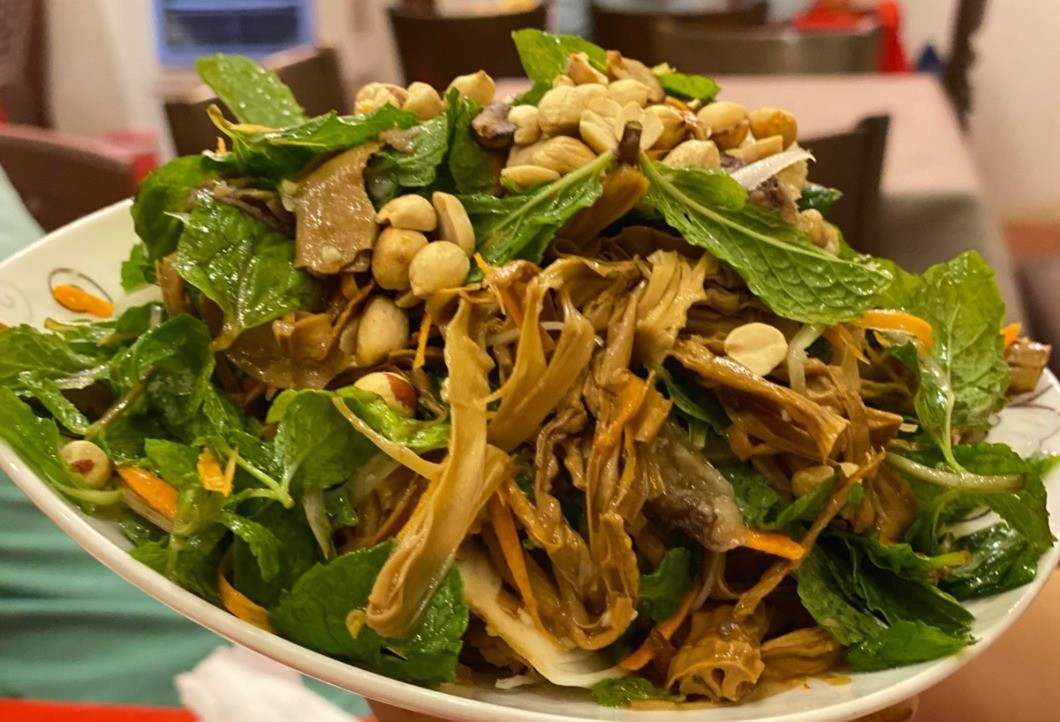
When talking about Mang Den cuisine, you cannot ignore dried chicken salad with bamboo shoots, a dish that is both familiar and strange. Chicken, dried bamboo shoots, onions, carrots, roasted peanuts and herbs are skillfully mixed to create a mildly sour, sweet flavor that becomes more “addictive” the more you eat it. This is an appetizer that is loved by many tourists thanks to its cool taste and characteristic aroma of wild bamboo shoots.
Enjoy Mang Den coffee
In addition to dishes rich in highland flavors, enjoying a cup of hot coffee in the chilly atmosphere is an experience not to be missed when coming to Mang Den. This small town is famous for its mildly fragrant, strong-tasting Arabica coffee, grown on high dew-covered hillsides.
If you want to find a small corner to admire the pine forest and enjoy the scent of Mang Den coffee, visitors can visit: Café de Mang Den; Moc Lan Cafe Mang Den, La Petite – Cafe
Note:
The road to Mang Den is quite steep and winding. Tourists driving by themselves should carefully check the vehicle, especially the brakes and tires, before departing. In addition, the weather here is chilly in the early morning and at night, so don’t forget to bring warm clothes.
Mang Den has many pine forests and thick vegetation, visitors should prepare extra mosquito and insect repellant to avoid being bitten when visiting or camping outdoors.