
 English
  Tiếng Việt
 日本語
日本語Discover the picturesque Japanese villages
Discover Japanese ancient villages
Japan – the land of the rising sun – has long been famous as the perfect interference between profound traditional values and outstanding modern development. When it comes to Japan, people often think of vibrant cities like Tokyo, Osaka or Kyoto – where technology, fashion and modern life are constantly changing. However, behind those skyscrapers and brilliant urban lights are a completely different Japan – peaceful, ancient and poetic.
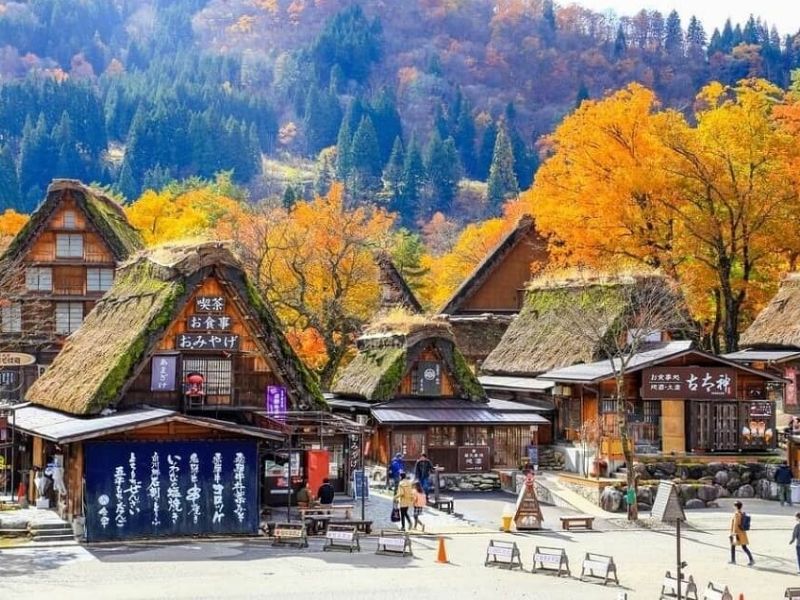
Hide in the middle of the mountain, the red and white forests, the white snow, the ancient Japanese villages are like films slowly preserving each breath of the past. This place is not merely a tourist destination, but also the door that leads the way to an original Japan – where you can clearly feel the pure life rhythm, traditional architecture, and sincere hospitality from the locals.
From the typical Gasshi-Jukuri roofs in Shirakawa-go to a peaceful scenery like a watercolor in the ancient village of Ine on the coast, each village carries a story, a distinct color, making visitors seem to enter a completely different world. In particular, in the traditional festive seasons, the villages become more and more sparkling, brilliant, reminiscent of an ancient Japanese but have never stepped back in the hearts of the people.
Lost in beautiful ancient villages in Japan
Taketomi ancient village
Taketomi is a small island imbued with the ancient spirit of the Ryukyu kingdom. White sand-paved roads, winding coral stone fences and houses with bright red tile roofs – all create a picture of a romantic village in the middle of the vast ocean. There is no city dust and smoke here, only the sound of wind, waves and the sound of buffalo wheels rattling through each small alley. Coming to Taketomi, you feel like you step back into the past, touching the slow, complete and simple life of the islanders.
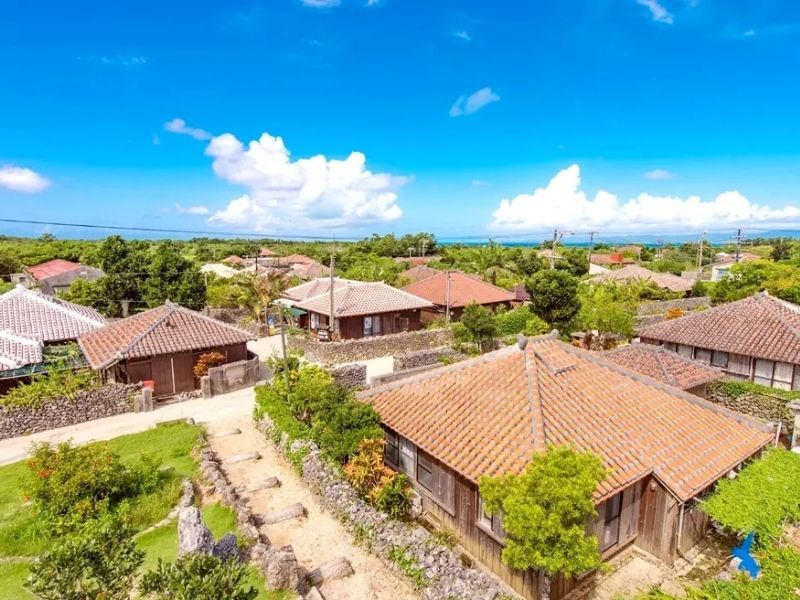
Address: Taketomi Island, Ishigaki City, Okinawa Province
Opening hours: All day (free travel, no time control)
Ticket price: Free (ferry cost from Ishigaki ~ 150,000 VND/way)
Yoshinoyama ancient village
In the spring, Yoshinoyama seemed to turn into a paradise when more than three thousand cherry roots bloom, covering the mountainside in the faint pink dream. The ancient temples and wooden roofs are hidden in the thin mist, making the village seem to step out from an old dream. Yoshino is not only beautiful by flowers, but also imbued with Buddhist spirit with centuries of pilgrimage and traditional festivals. Walking on the rocky road around the mountainside, you will feel the absolute harmony between nature and spirituality.
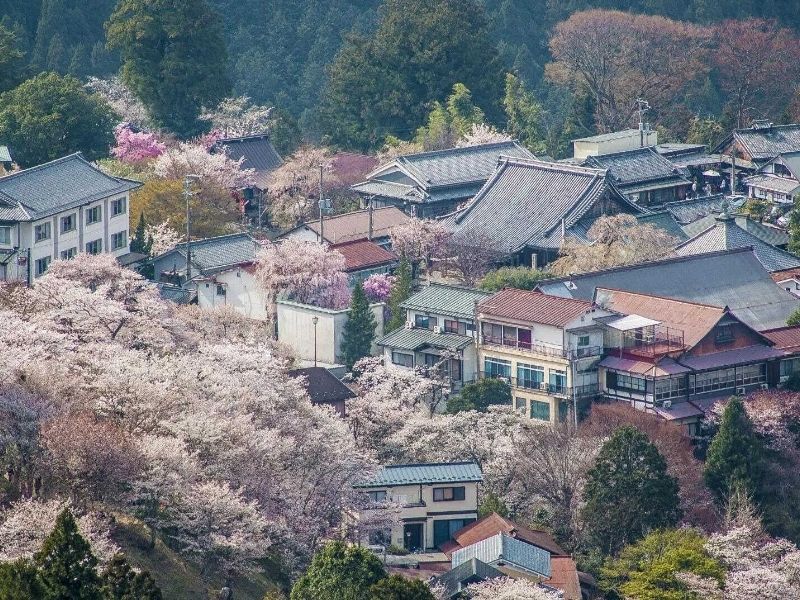
Address: Yoshino Mountain, Nara Province
Opening hours: All day (free travel)
Ticket price: Free (visit fees for each point: ~ 50,000–100,000 VND)
Hattoji Furusato ancient village
Hattoji Furusato belongs to the province Okayama, the small village seemed to have been forgotten by time. With curved roofed houses, brown walls, mossy stone wells and trails through the bamboo garden, this place brings pure and rustic beauty as a lively water painting. There was no car horn, there was no convenience store – only the sound of the birds called in the morning, the smell of the kitchen smoke hidden and the cool breeze fluttering through the porch. Hattoji is an ideal place to pause, to breathe slowly and listen to himself.
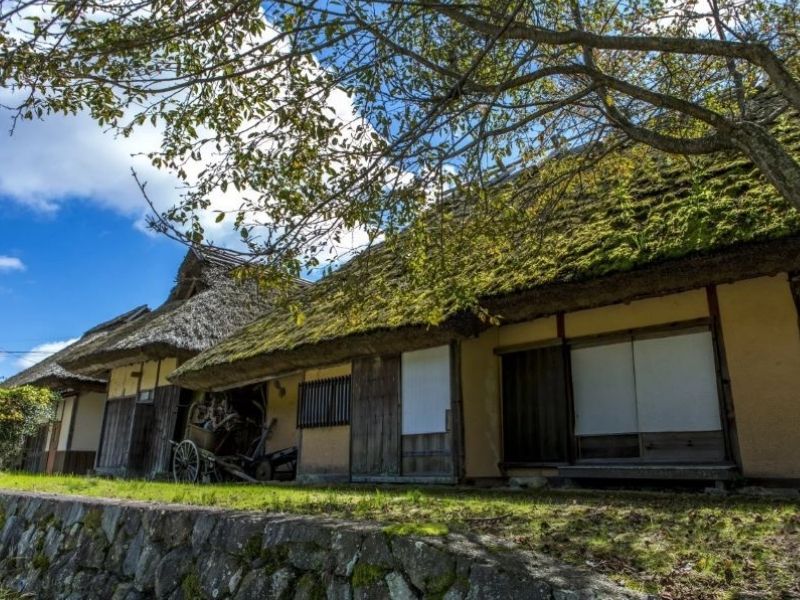
Address: Bizen-shi, Okayama Prefecture
Opening hours: 09:00 – 17:00
Ticket price: Free for sightseeing (overnight costs ~ 400,000–800,000 VND/person)
Ine no Funaya ancient village
Ine No Funaya is the only place in Japan that owns more than 200 boats – houses that are both a place to live and a dock for boats. Every morning, the thin mist covered the surface of the sea, reflecting the deep wooden roof shadow to create a quiet and lyrical scene to the heart. People here live in the same sea, sticking to tidal rhythms like breath. Coming to Ine, you will want to sit for hours to watch the boat docking, listen to whispering waves, so that your heart will follow that quiet life.
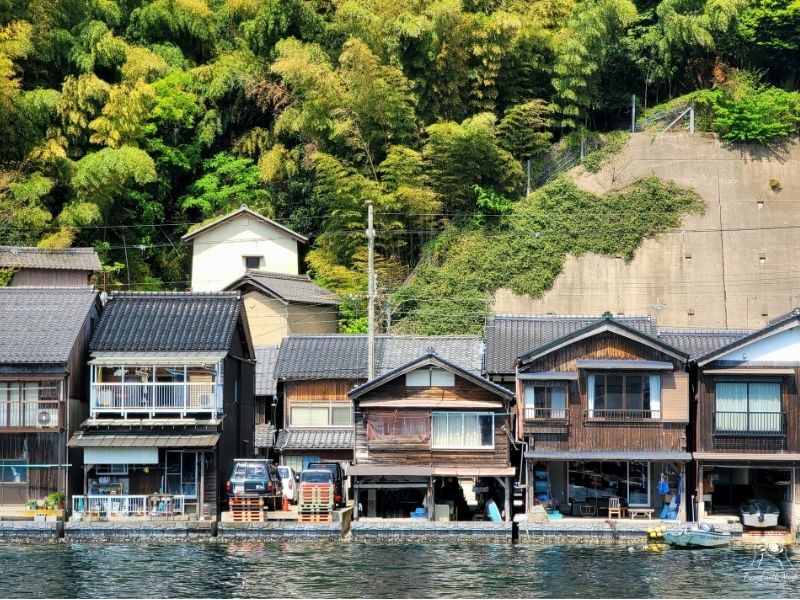
Address: Ine Bay, Kyoto Province
Opening hours: 08:00 – 18:00
Ticket price: Free to the village (boat ticket to visit ~ 150,000 VND)
Oshino Hakkai ancient village
Oshino Hakkai Famous for 8 sacred lakes made up of the melting ribbon of Mount Fuji. The water is so clear that the bottom can be seen, creating a quiet, peaceful scene like a picture. The ancient paintings, wooden bridges, mochi and grilled stream fish are specialties of the village.
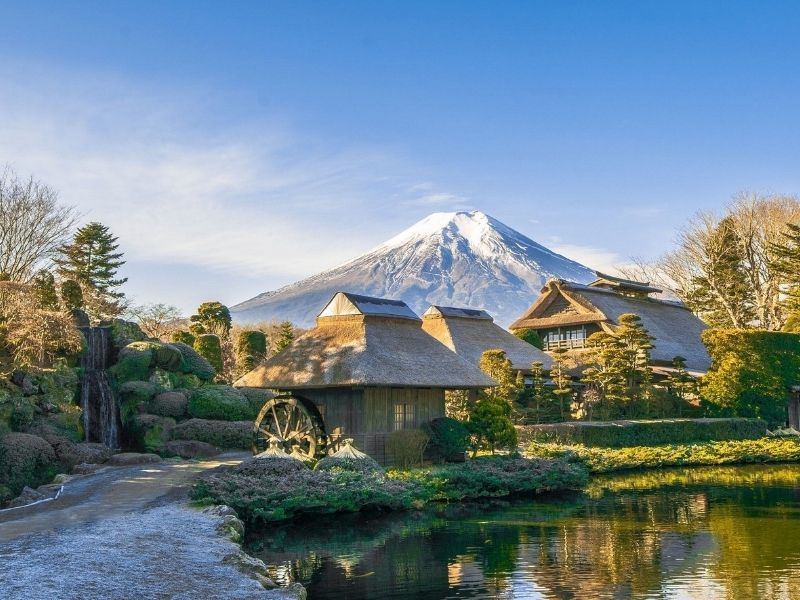
Address: Oshino, Yamanashi province
Opening hours: 08:30 – 17:00
Ticket price: Free (some reserve ~ 70,000 VND)
Old Gokayama Village
Gokayama village is located in Toyama province like a forgotten valley, where time stopped between the Gasshi – Zukuri roof under the snow. Not as noisy as Shirakawago, Gokayama is gentle, pristine and with meditation. When snow dissolves, the green rice fields and the thin smoke from the wood stove draw a poetic scene. Coming here, you not only travel – you live like an old Japanese, very slow, very deep.

Address: Nanto town, Toyama province
Opening hours: 08:00 – 17:00
Ticket price: Free to the village (Gassho Museum ~ 80,000 VND)
Japanese ancient village Shirakawago
Shirakawago As the most famous village in Japan, UNESCO recognized as a world cultural heritage. The Gasshi-Jukuri roof houses are hundreds of years old, alternating between rice fields and smooth rivers. In the winter, Shirakawago shimmering in the snow light, attracting thousands of visitors every year.

Address: Shirakawa, Gifu Province
Opening hours: 08:30 – 17:00
Ticket price: Free to the village (some old houses ~ 60,000 – 100,000 VND)
Ainokura Japanese ancient village
Ainokura, located in the province, is a quiet ancient village like a vivid painting that time seems to have forgotten to touch. This place stands out with gassho – zukuri houses with steep thatched roofs, clustered together like praying hands – both rustic and sacred. Amidst the morning mist and the soft sound of forest birds singing in the bamboo groves, Ainokura appears like a fairyland of the Japanese mountains. With each passing season, Ainokura puts on a new look – blue spring, brilliant autumn and white winter, making anyone who visits it never want to leave.
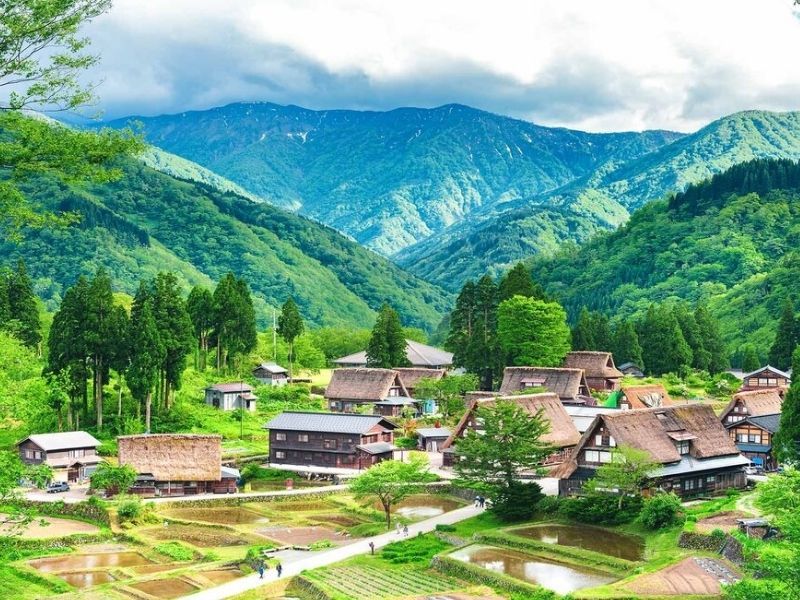
Address: Ainokura, Taila town, Nanto city, Toyama province, Japan
Opening hours: All day (Free sightseeing, some old houses are open from 09:00 – 17:00)
Ticket price:Free to the village. Some museums or old houses have charges (~ 60,000 – 100,000 VND/person)
The notes when visiting the ancient Japanese villages
Visiting ancient villages in Japan is not only a scenic journey, but also an opportunity for you to listen to the traditional life, touching the cultural values that have been preserved for hundreds of years. To make the trip more complete and show respect for the local people, please note the following:
Keep quiet and order The ancient villages are often very peaceful, people still live here. Restrict talking too loudly, do not open music or make noise that affects their daily lives.
Do not invade private areas Many houses have beautiful architecture but are the real accommodation of the people, not public attractions. Point to the house when there is a “Open” or invited sign. Do not take photos inside the house if not allowed.
Protection of heritage and environment No graffiti, climb on the roof, sit on the doorstep or break the tree. These villages are often a strictly preserved cultural heritage – a small act of lack of consciousness can also have great consequences.
Carrying cash and personal items Some villages are located in mountains and remote areas, so there will be no ATMs and cards that cannot be used. Bring enough cash, drinking water, and soft sole shoes to facilitate travel.
Get in the appropriate season and pay attention to the weather In the winter, snow may fall thick in Shirakawago or Gokayama – very beautiful but slippery. Summer should avoid the hot noon. Each season one looks, but you should preview the weather forecast for the best preparation.
Respect the spiritual space Many villages have ancient temples and pagodas. When entering these areas, behave solemnly, do not say laughing, not arbitrarily filming pictures if there is a ban.
Try local experiences Don’t just walk – try making mochi, drink tea, try to wear kimono, or sleep one night in the old house. It is the best way for you to “live” in the same village, instead of just “visiting”.
Each ancient Japanese village is a slice of memory, a gentle symphony between nature and tradition. Whether the peaceful look of Ainokura, the romance of the sea of Ine No Funaya or the sky of cherry blossoms in Yoshinoyama, all will leave you with a beautiful and deep nostalgia.