
 English
 Tiếng Việt
 日本語
Hanoi surveyed people’s opinions before the plan to adjust the milk flower tree
The Hanoi City Technical Infrastructure Management Center under the Department of Construction has just asked the People’s Committees of communes and wards and the Management Board of High-Tech Parks and Industrial Parks of the city to coordinate in surveying the current situation and at the same time collect people’s opinions on adjusting the density of milk flower trees. Review activities focused on roads with large numbers of milk flowers, especially in crowded residential areas, near houses, schools, hospitals and areas where reports of the flower smell affecting daily life have been recorded.
Localities are required to make specific statistics for each route and location, including the number of trees, growth status as well as the level of scent impact. These data will be the basis for determining which areas need priority for treatment. The Center for Technical Infrastructure Management notes that just because a tree belongs to the milk flower species does not mean it must be included in the relocation list, but requires a separate assessment of each tree’s condition, planting density and role in the area’s landscape. 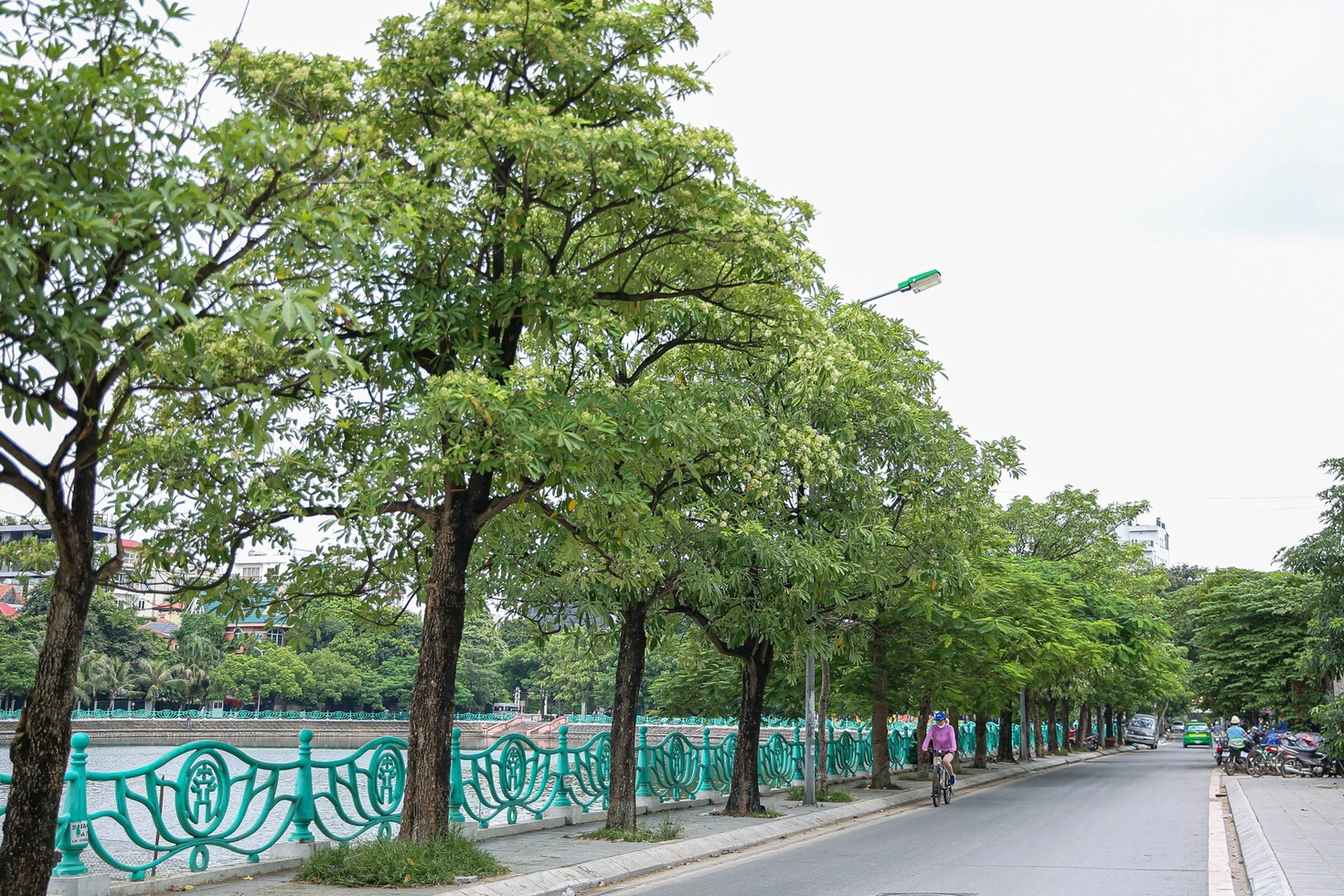 After the survey results are available, the local government will hold a meeting to get opinions from people and residential groups about the impact of the flower smell as well as appropriate solutions. People can suggest keeping the trees intact, increasing care, pruning flower clusters or moving part of the trees in places where the density is too high to supplement other tree species. This approach aims to balance the need to reduce impacts on daily life with the goal of maintaining the city’s unique green system and landscape. In the immediate future, areas identified as having a floral scent that greatly affects people’s lives will be given priority to apply selective pruning of inflorescences and flower-bearing branches. This measure is intended to reduce the number of flowers and the level of odor dispersion while still ensuring tree canopy shape, vitality and safety. Implementing units are not allowed to amputate the tops, prune trees excessively or use chemicals that inhibit the flowering process that have not been permitted by the authorities. In the long term, in locations that are considered no longer suitable, localities can propose to move part of the milk flower tree and choose replacement tree species according to Hanoi’s green tree development project. However, relocation, felling or replacement planting can only be done after a specific plan is approved by the competent authority, to avoid mass processing without fully assessing the current status and landscape value of each street. Regarding information that Hanoi will replace all milk flower trees on Nguyen Du street with black star trees or simultaneously replace milk flowers on many roads, the Center for Technical Infrastructure Management said that the city currently has no specific decision or plan in this direction. The policy is determined to receive people’s opinions, focus on handling real inadequacies and at the same time preserve as much as possible the rows of trees that are attached to the landscape, memories and urban identity of Hanoi. Hanoi currently has about 14,400 milk flower trees, ranking fourth among the most popular tree species in the city. This number is lower than the crocodile tree with about 26,400 trees, the Polyscias fruticosa tree with about 17,500 trees and the Poinciana tree with about 16,000 trees. Milk flowers are currently grown on many streets such as Nguyen Du, Quan Thanh, Tran Duy Hung, Trung Hoa, Trung Kinh, Duy Tan, Nguyen Chi Thanh, Me Tri, Ho Tung Mau, Dao Tan, Nguyen Khanh Toan, Thuy Khue, Lac Long Quan, Le Van Luong, Le Quang Dao and Hoang Quoc Viet. Collecting community opinions is considered an important part before the city proposes a specific adjustment plan. Instead of eliminating milk flowers on a large scale, Hanoi aims to deal with each location and actual density, combining immediate technical solutions with long-term tree adjustment plans, thereby limiting the impact of the flower smell but still preserving the rows of trees that have become a familiar part of the Capital’s landscape.